Equity

Research

Articles, macro commentary and country portraits

RSS feed

21 publications

MacroOct 14, 2026

The Sovereign Debt Crisis

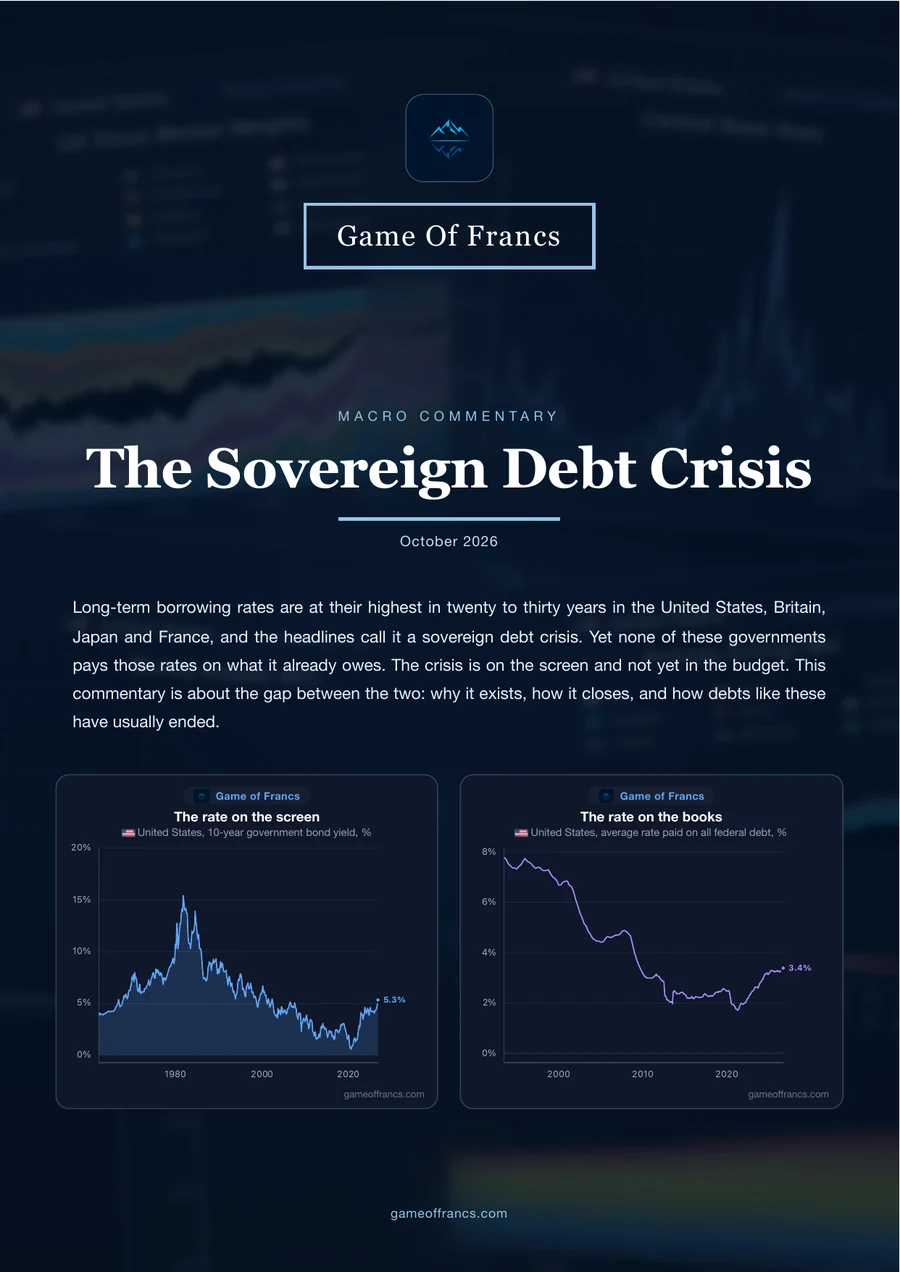
Long-term borrowing rates are at their highest in twenty to thirty years in the United States, Britain, Japan and France, and the headlines call it a sovereign debt crisis. Yet none of these governments pays those rates on what it already owes. The crisis is on the screen and not yet in the budget. This commentary is about the gap between the two: why it exists, how it closes, and how debts like these have usually ended.

by Game Of Francs Research Team
FranceOct 11, 2026

France in Charts

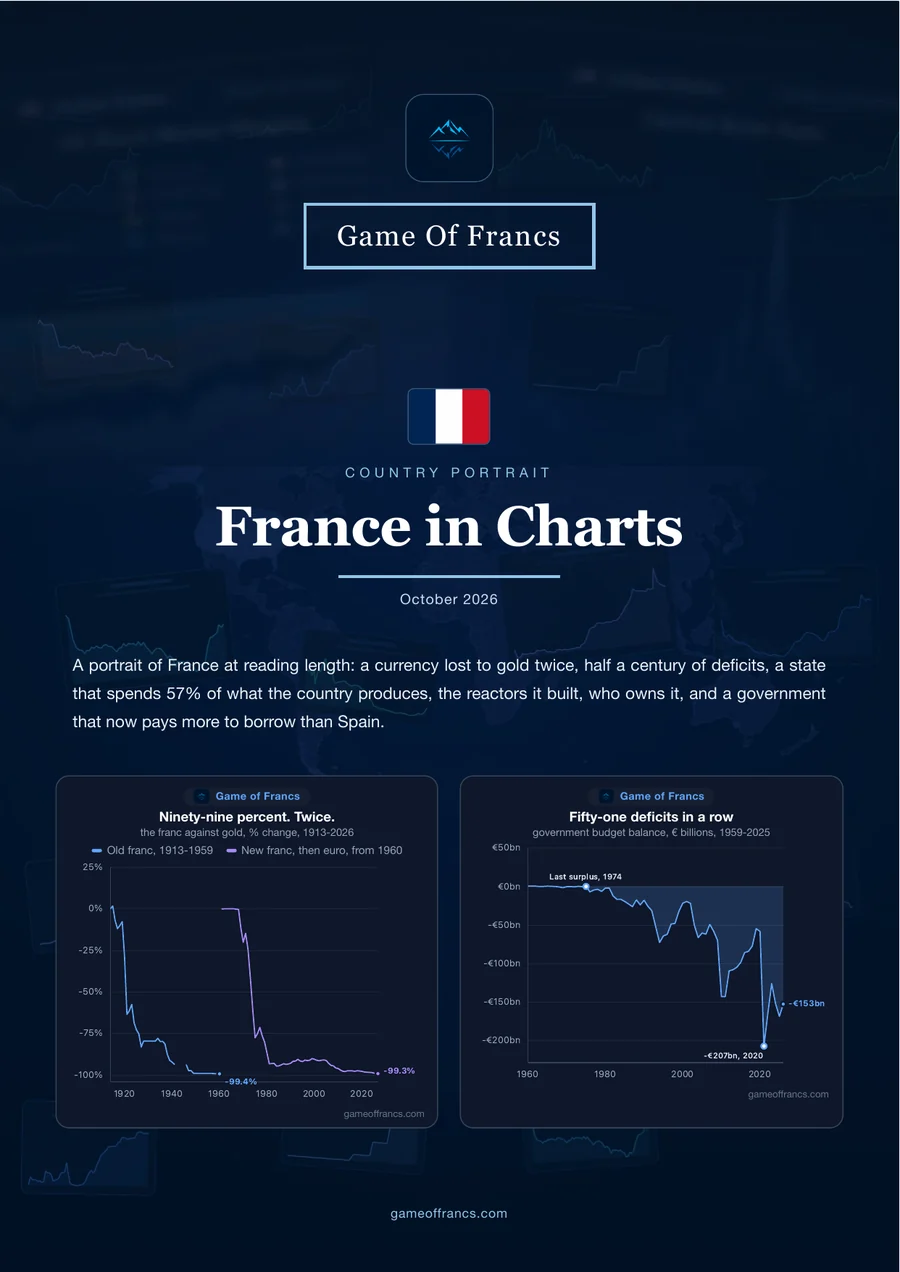
A portrait of France at reading length — a currency lost to gold twice, half a century of deficits, a state that spends 57% of what the country produces, the reactors it built, who owns it, and a government that now pays more to borrow than Spain.

by Game Of Francs Research Team

MacroOct 7, 2026

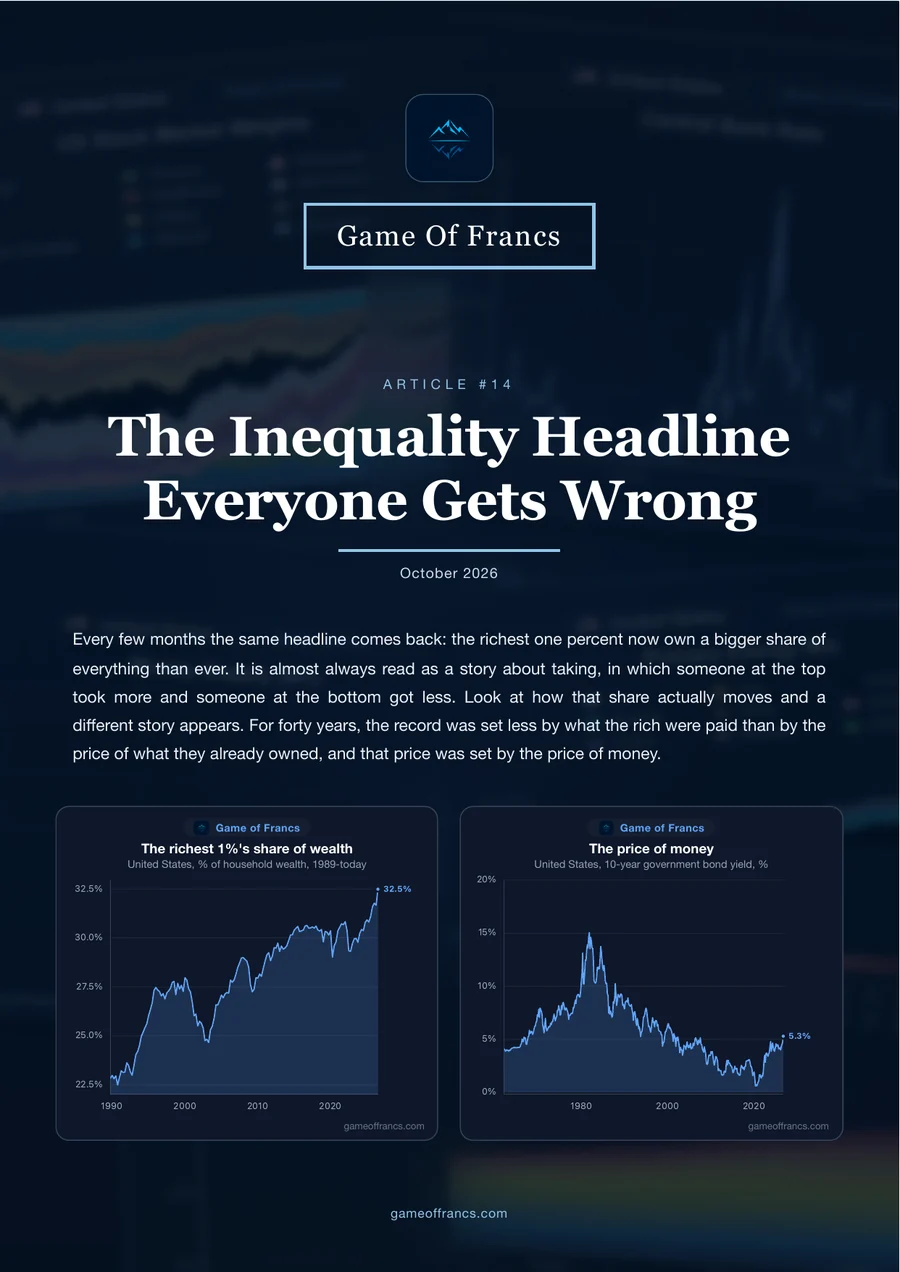
#14 - The Inequality Headline Everyone Gets Wrong

Every few months the same headline comes back: the richest one percent now own a bigger share of everything than ever. It is almost always read as a story about taking, in which someone at the top took more and someone at the bottom got less. Look at how that share actually moves and a different story appears. For forty years, the record was set less by what the rich were paid than by the price of what they already owned, and that price was set by the price of money.

by Game Of Francs Research Team

United KingdomOct 4, 2026

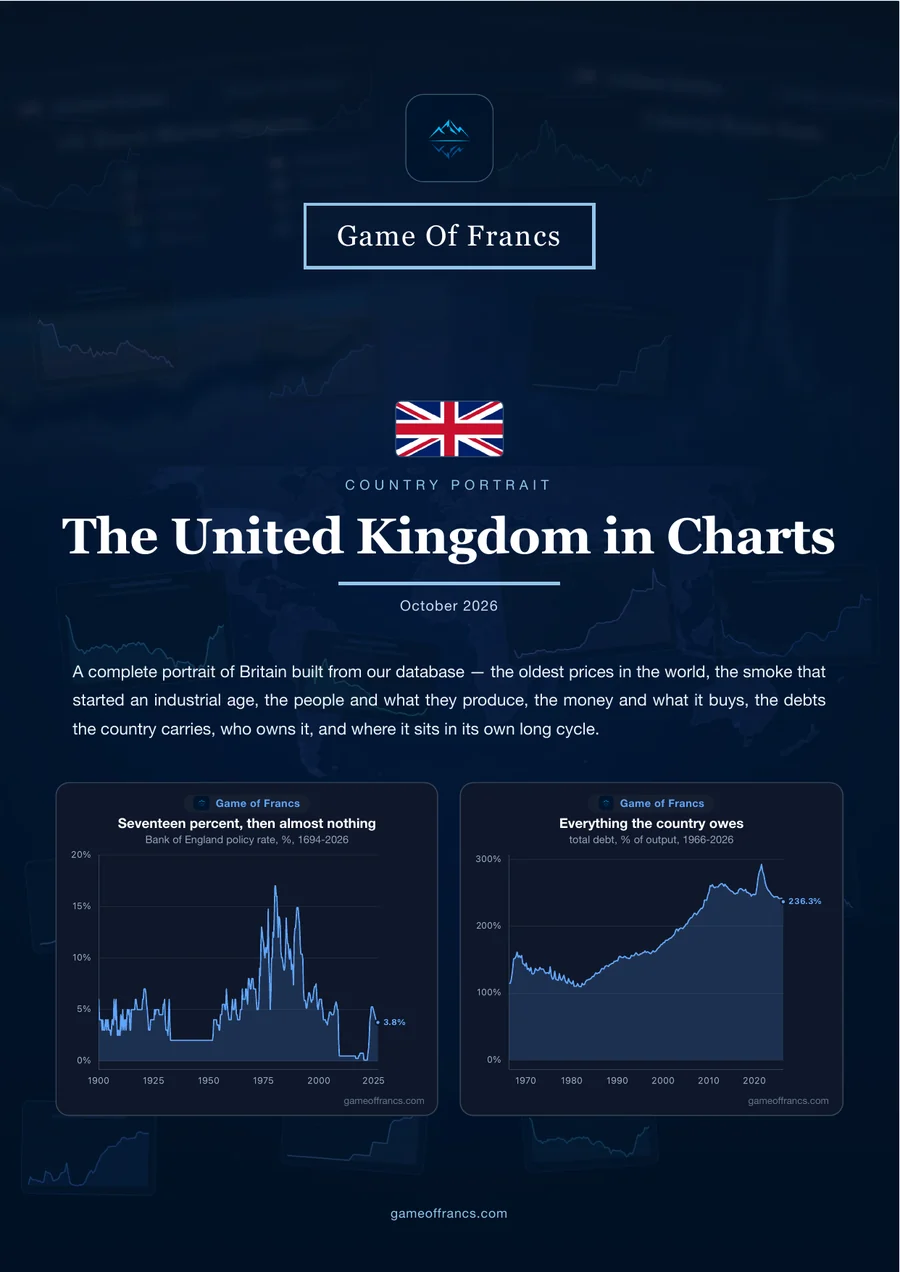
The United Kingdom in Charts

A complete portrait of Britain built from our database — the oldest prices in the world, the smoke that started an industrial age, the people and what they produce, the money and what it buys, the debts the country carries, who owns it, and where it sits in its own long cycle.

by Game Of Francs Research Team

MacroSep 30, 2026

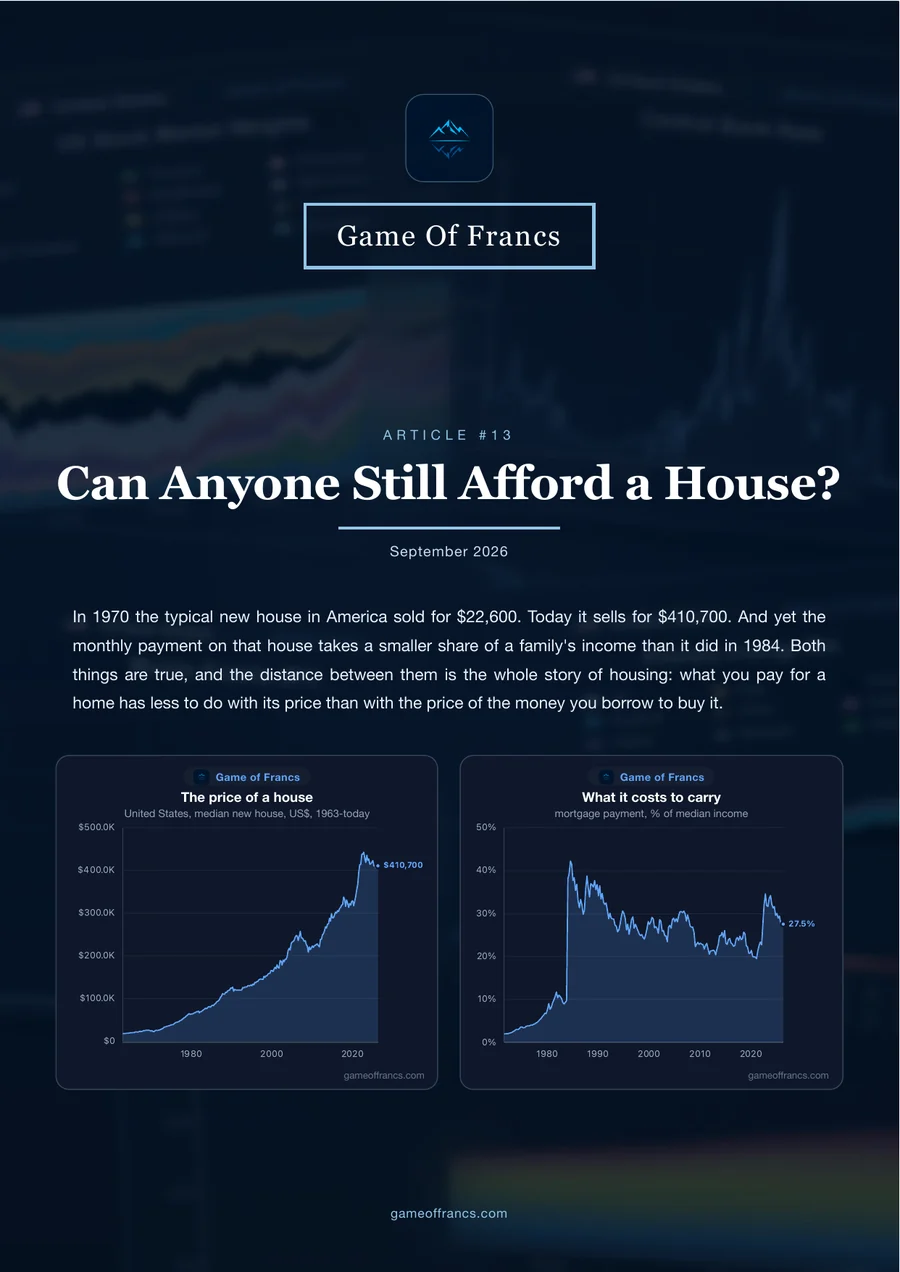
#13 - Can Anyone Still Afford a House?

In 1970 the typical new house in America sold for $22,600. Today it sells for $410,700 — and yet the monthly payment on it takes a smaller share of a family's income than it did in 1984. Both are true, and the distance between them is the whole story of housing: what you pay for a home has less to do with its price than with the price of the money you borrow to buy it.

by Game Of Francs Research Team

ChinaSep 27, 2026

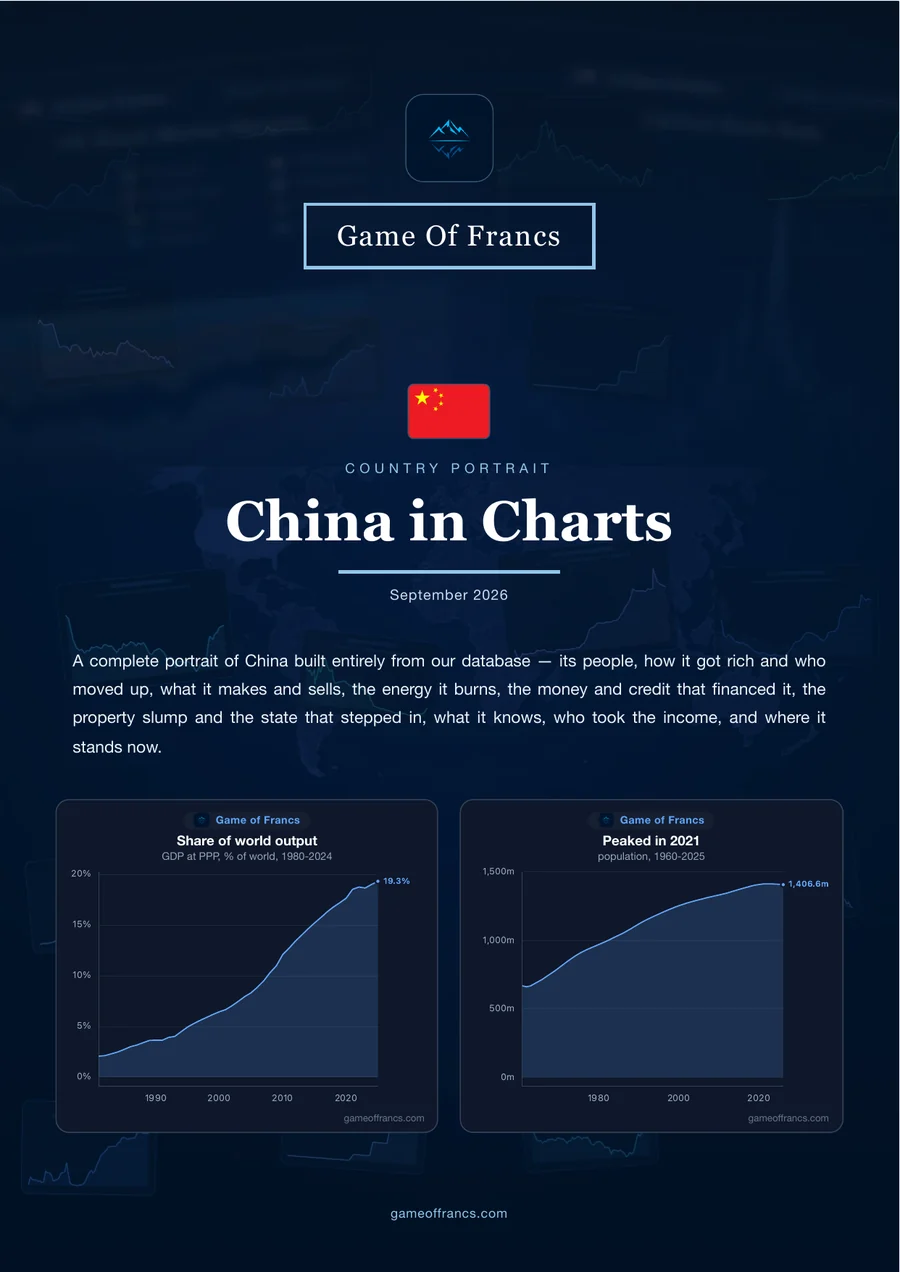
China in Charts

A complete portrait of China built entirely from our database — its people, how it got rich and who moved up, what it makes and sells, the energy it burns, the money and credit that financed it, the property slump and the state that stepped in, what it knows, who took the income, and where it stands now.

by Game Of Francs Research Team

MonetarySep 23, 2026

#12 - The Return of Gold

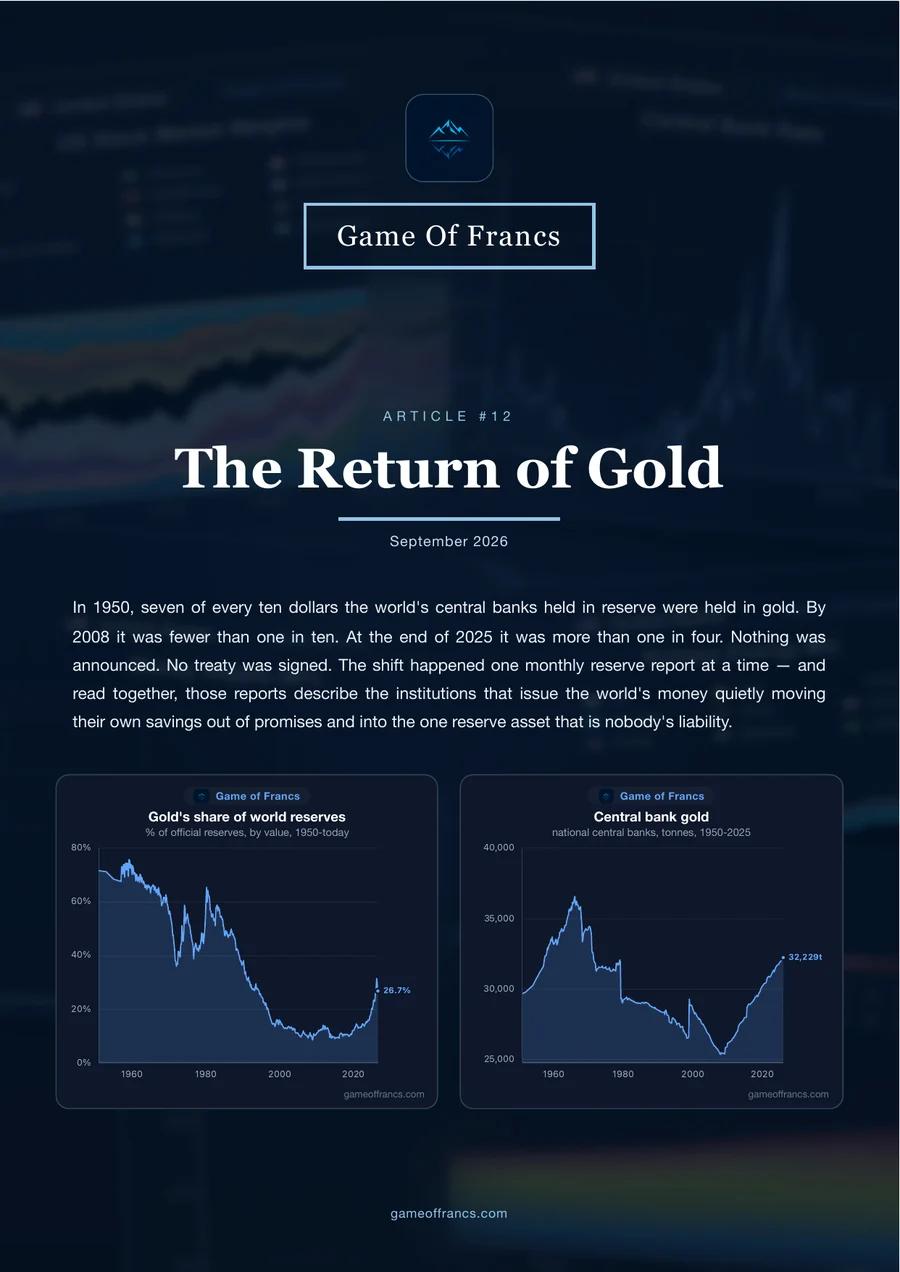
In 1950, seven of every ten dollars the world's central banks held in reserve were held in gold. By 2008 it was fewer than one in ten. At the end of 2025 it was more than one in four. Read together, their monthly reserve reports describe the institutions that issue the world's money quietly moving their own savings out of promises and into the one reserve asset that is nobody's liability.

by Game Of Francs Research Team

United StatesSep 20, 2026

The United States in Charts

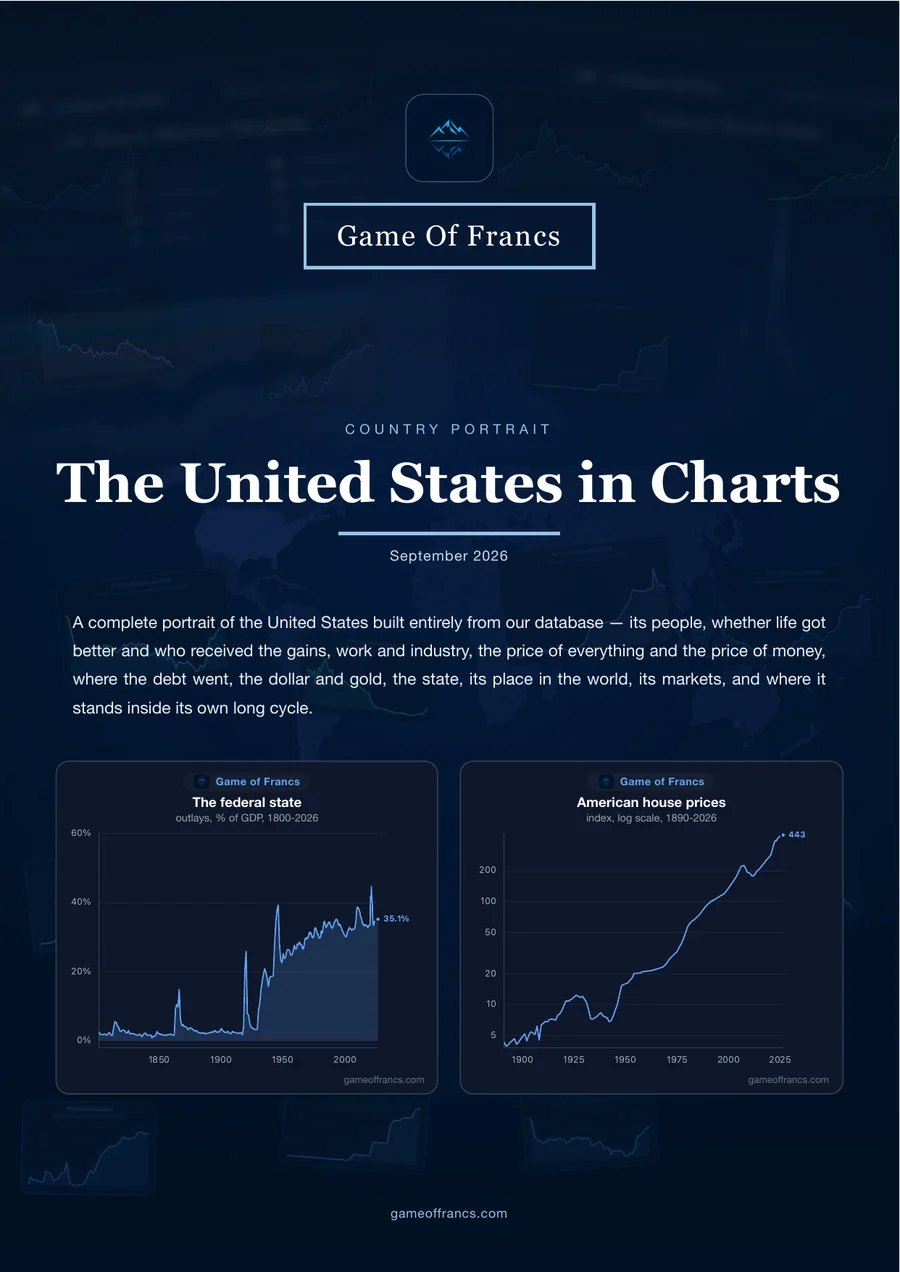
A complete portrait of the United States built entirely from our database — its people, whether life got better and who received the gains, work and industry, the price of everything and the price of money, where the debt went, the dollar and gold, the state, its place in the world, its markets, and where it stands inside its own long cycle.

by Game Of Francs Research Team

MonetarySep 9, 2026

#11 - A World in Debt

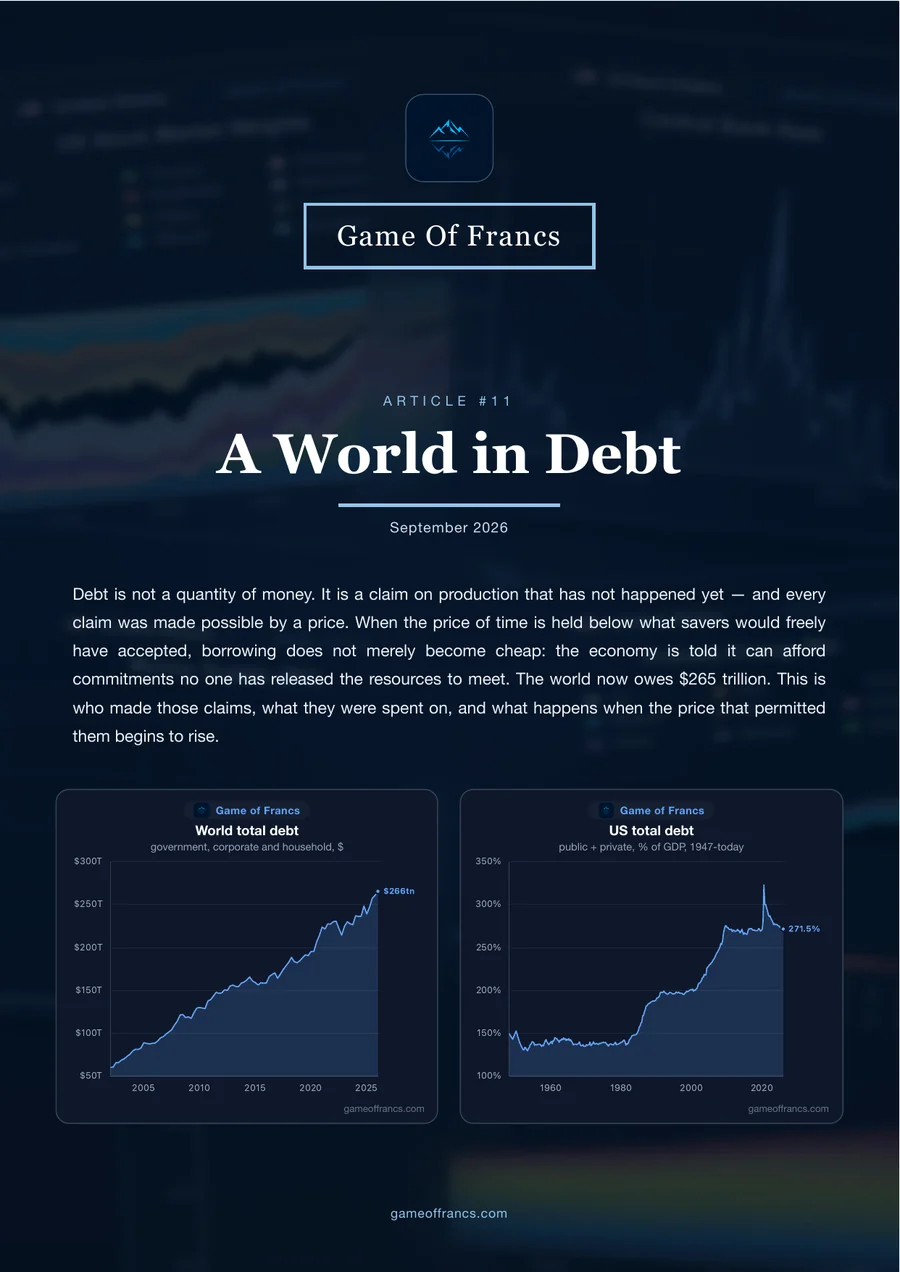
Debt is not a quantity of money. It is a claim on production that has not happened yet — and every claim was made possible by a price. When the price of time is held below what savers would freely have accepted, the economy is told it can afford commitments no one has released the resources to meet. The world now owes $265 trillion.

by Game Of Francs Research Team

MonetarySep 2, 2026

#10 - The Great Financial Crisis of 2008

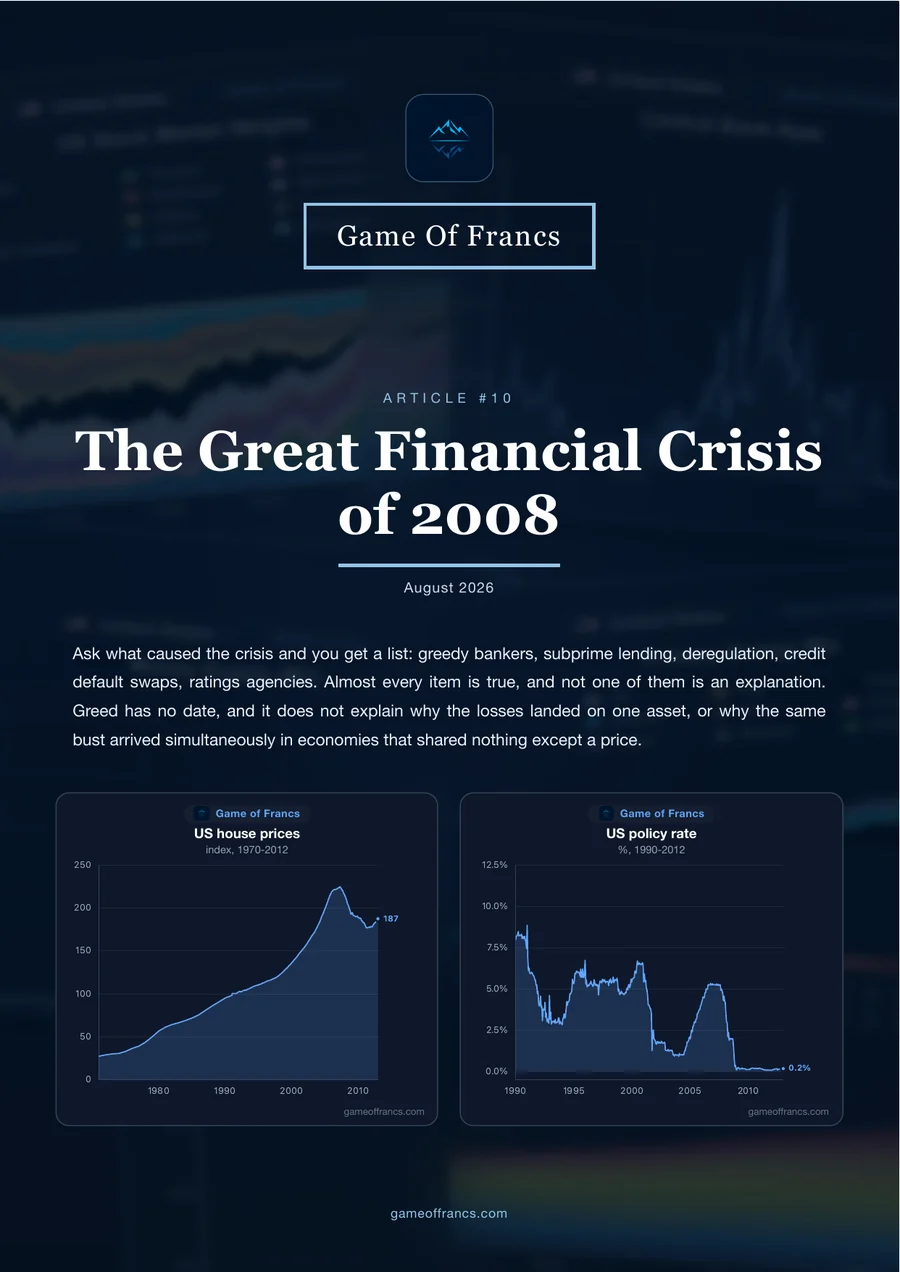
Ask what caused the crisis and you get a list: greedy bankers, subprime lending, deregulation, credit default swaps, ratings agencies. Almost every item is true, and not one of them is an explanation. Greed has no date, and it does not explain why the losses landed on one asset, or why the same bust arrived simultaneously in economies that shared nothing except a price. What changed was the price of time — and the audit that the bust began was interrupted rather than completed.

by Game Of Francs Research Team

JapanAug 16, 2026

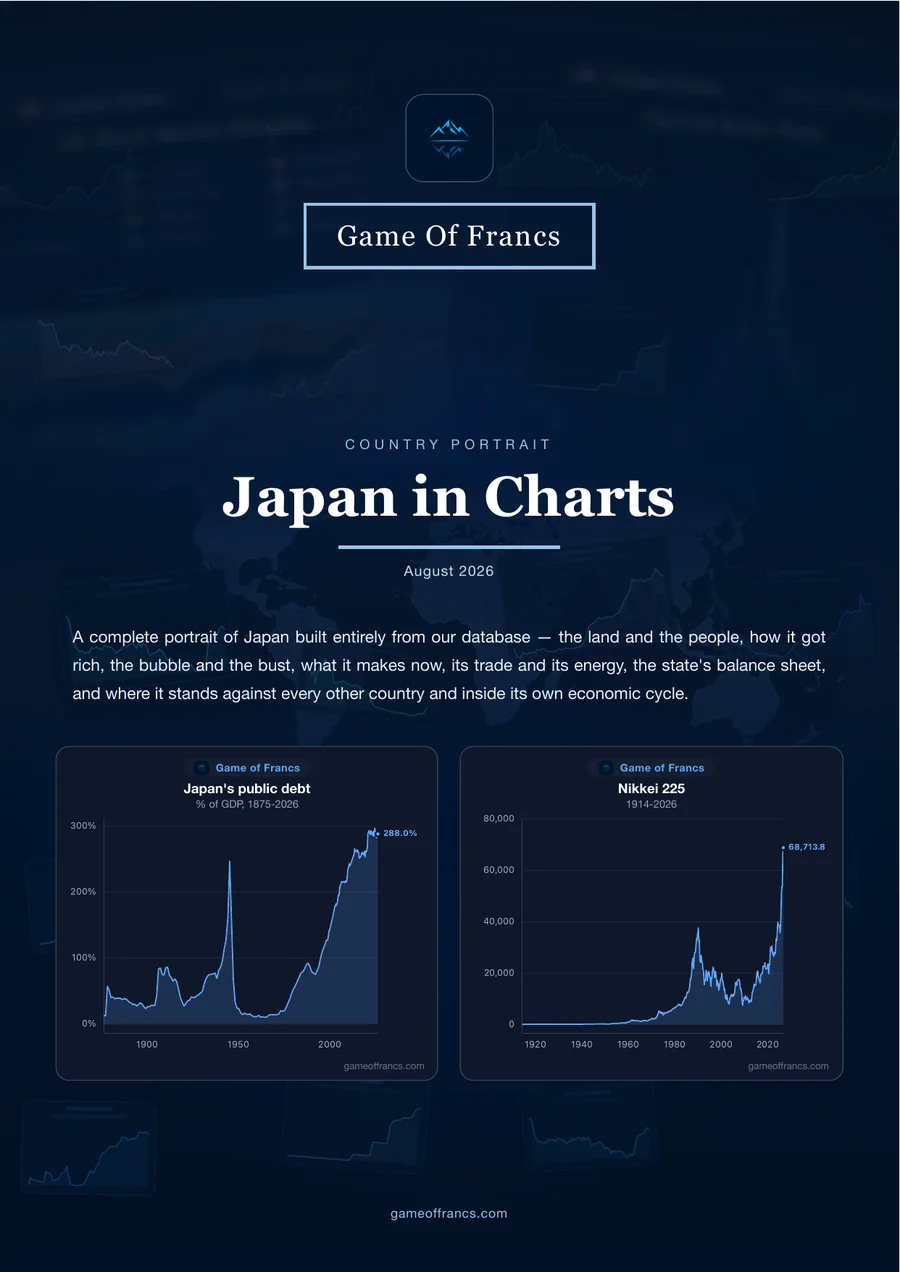
Japan in Charts

A complete portrait of Japan built entirely from our database — the land and the people, how it got rich, the bubble and the bust, what it makes now, its trade and its energy, the state's balance sheet, and where it stands against every other country and inside its own economic cycle.

by Game Of Francs Research Team

MacroAug 14, 2026

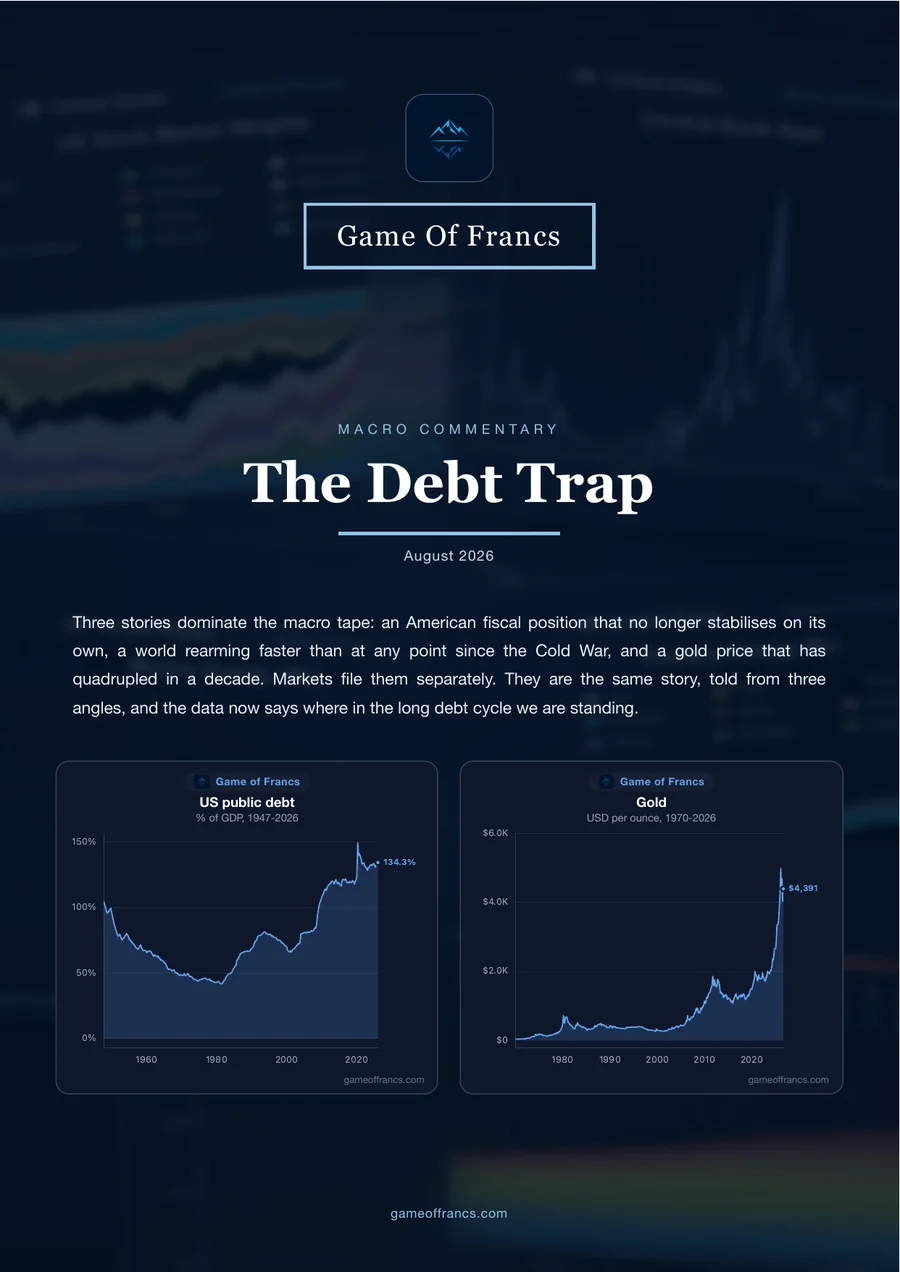
The Debt Trap

Three stories dominate the macro tape: an American fiscal position that no longer stabilises on its own, a world rearming faster than at any point since the Cold War, and a gold price that has quadrupled in a decade. Markets file them separately. They are the same story, told from three angles, and the data now says where in the long debt cycle we are standing.

by Game Of Francs Research Team

MacroJul 17, 2026

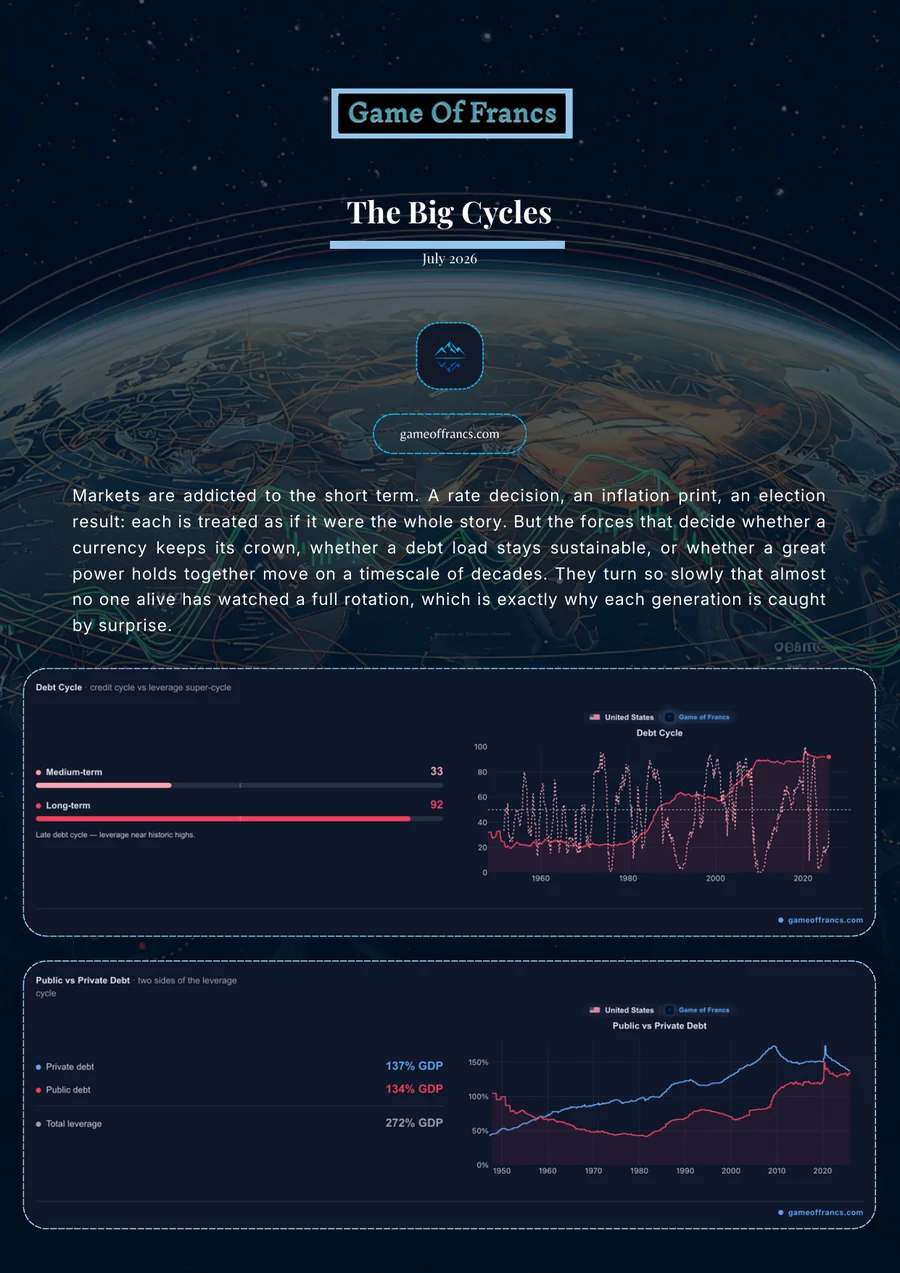
#9 - The Big Cycles

Markets are addicted to the short term, but the forces that decide whether a currency keeps its crown, whether a debt load stays sustainable, or whether a great power holds together move on a timescale of decades. Through Ray Dalio's Big Cycles lens — the long debt and money cycle, the internal cycle of order and disorder, and the external rise and fall of great powers — this is an attempt to zoom out from the headline and ask a single question: where in the long arc are we actually standing?

by Game Of Francs Research Team

MacroJun 16, 2026

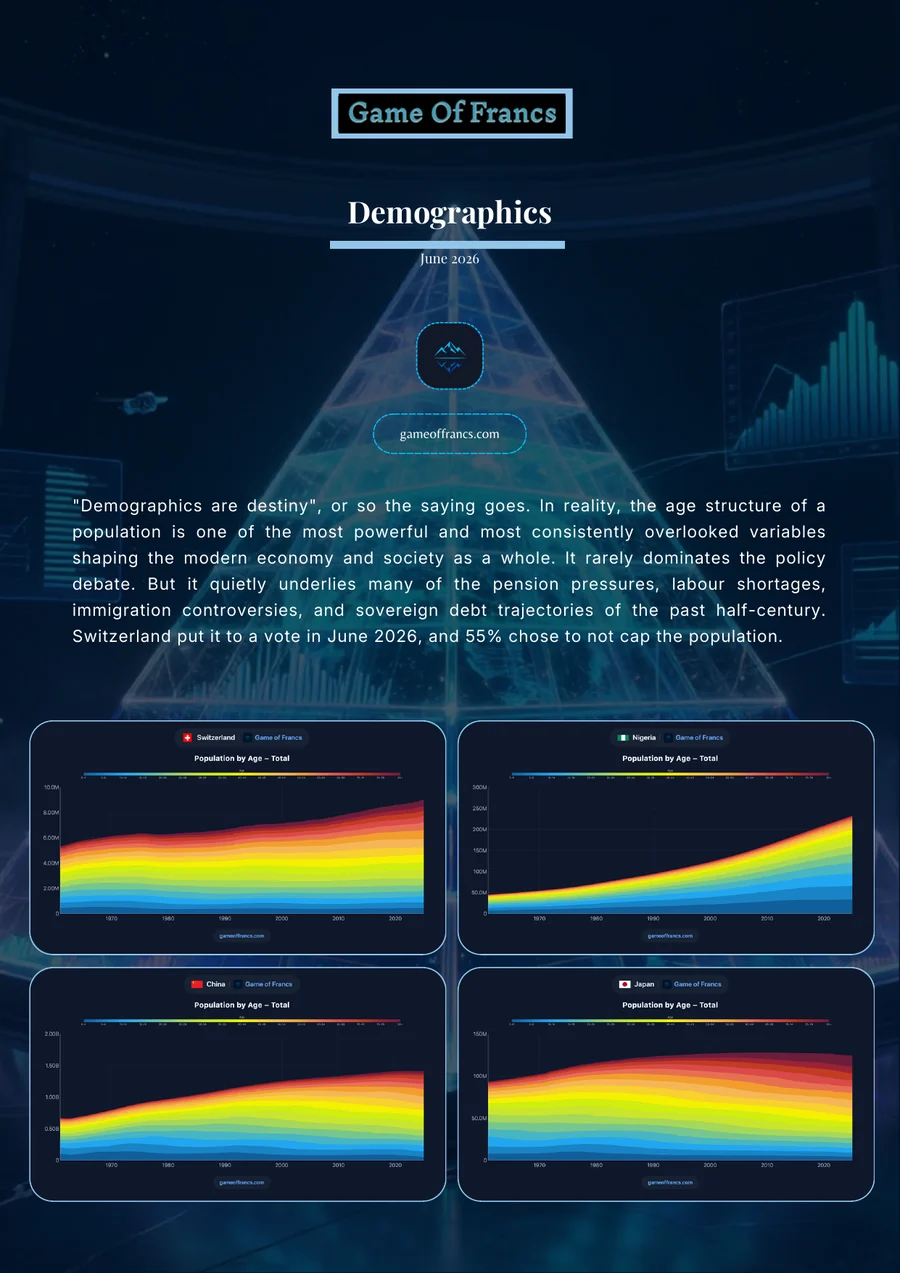
#8 - Demographics

The age structure of a population is one of the most powerful and most consistently overlooked forces in the modern economy — quietly shaping pensions, labour markets, asset prices and sovereign debt across the developed world. From Japan, the country that arrived first, to Switzerland's June 2026 referendum on capping its population, this is the fiscal arithmetic of ageing: a pay-as-you-go promise made under demographic assumptions that no longer hold, and the intergenerational transfer every ageing society must eventually confront.

by Game Of Francs Research Team

MonetaryJun 11, 2026

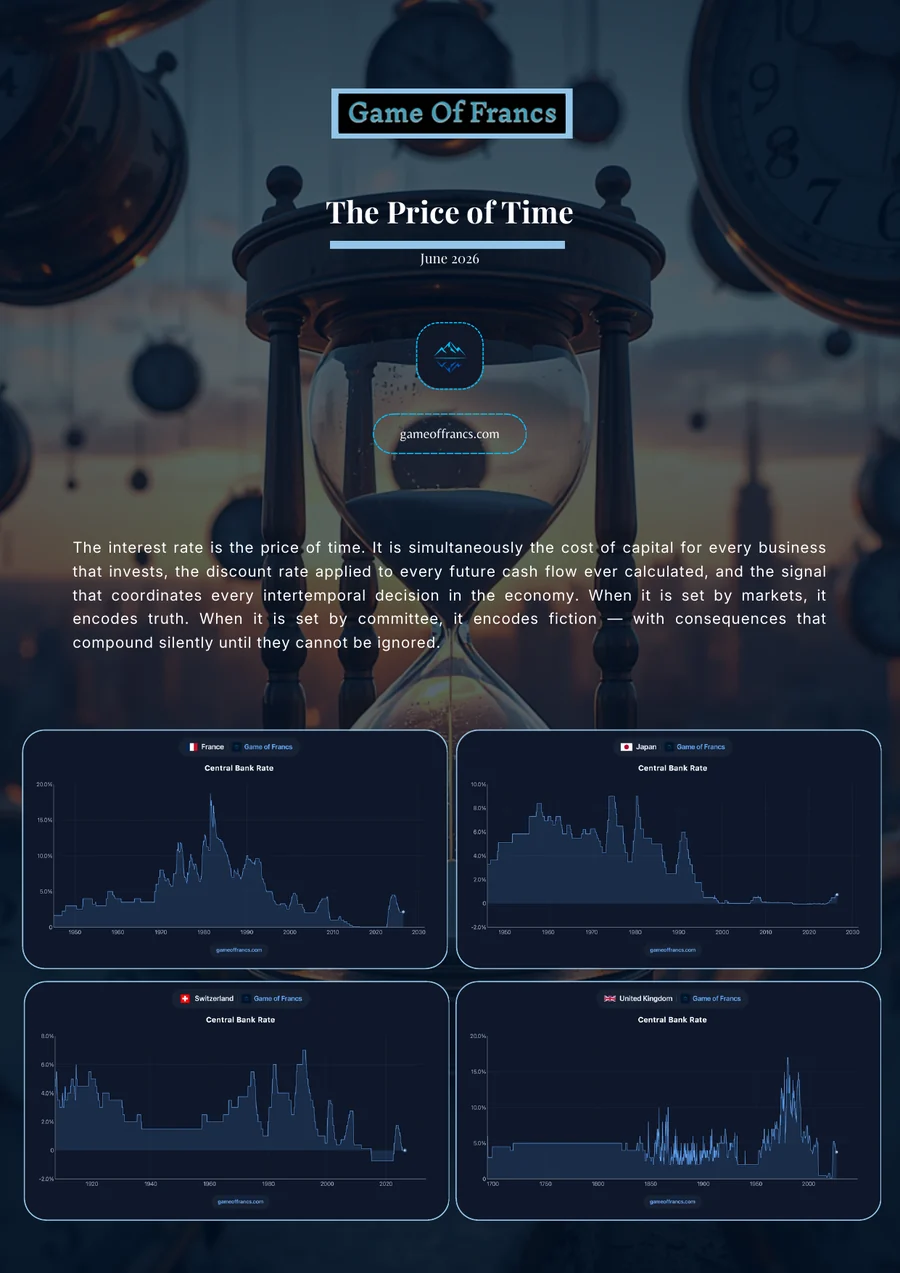
#7 - The Price of Time

The interest rate is the price of time — the cost of capital, the discount rate on every future cash flow, and the signal coordinating every intertemporal decision in the economy. Rooted in human time preference, it is the one price that underlies every other. When set by markets it encodes truth; when set by committee it encodes fiction, with consequences that compound silently until they cannot be ignored.

by Game Of Francs Research Team

MarketsMay 20, 2026

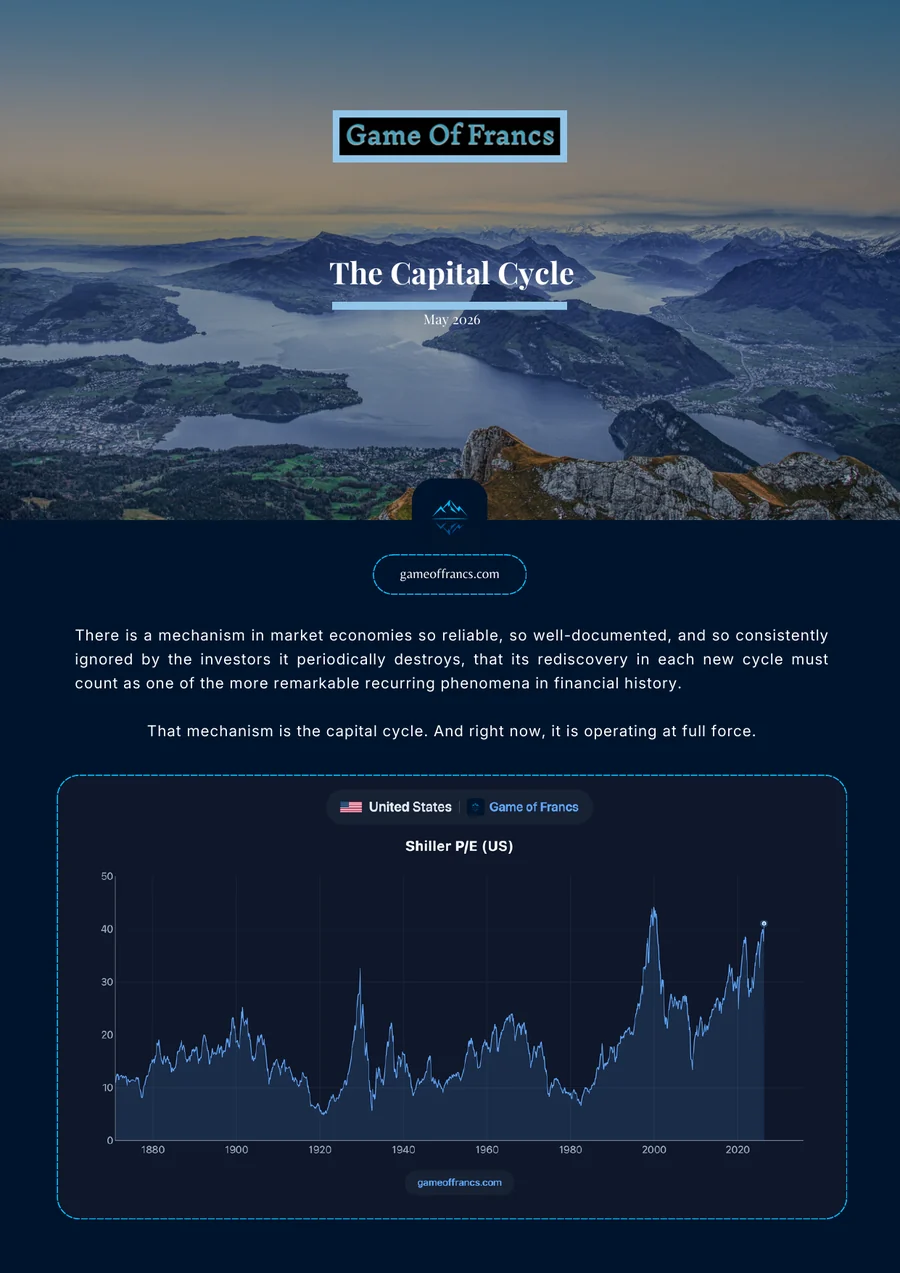
#6 - The Capital Cycle

Edward Chancellor's capital cycle framework — high returns attract capital, capital floods the industry, supply expands, returns compress — applied to the 2025–2026 AI infrastructure buildout, where venture and hyperscaler capex have reached a magnitude that historically precedes deeply disappointing returns.

by Game Of Francs Research Team

MonetaryMay 13, 2026

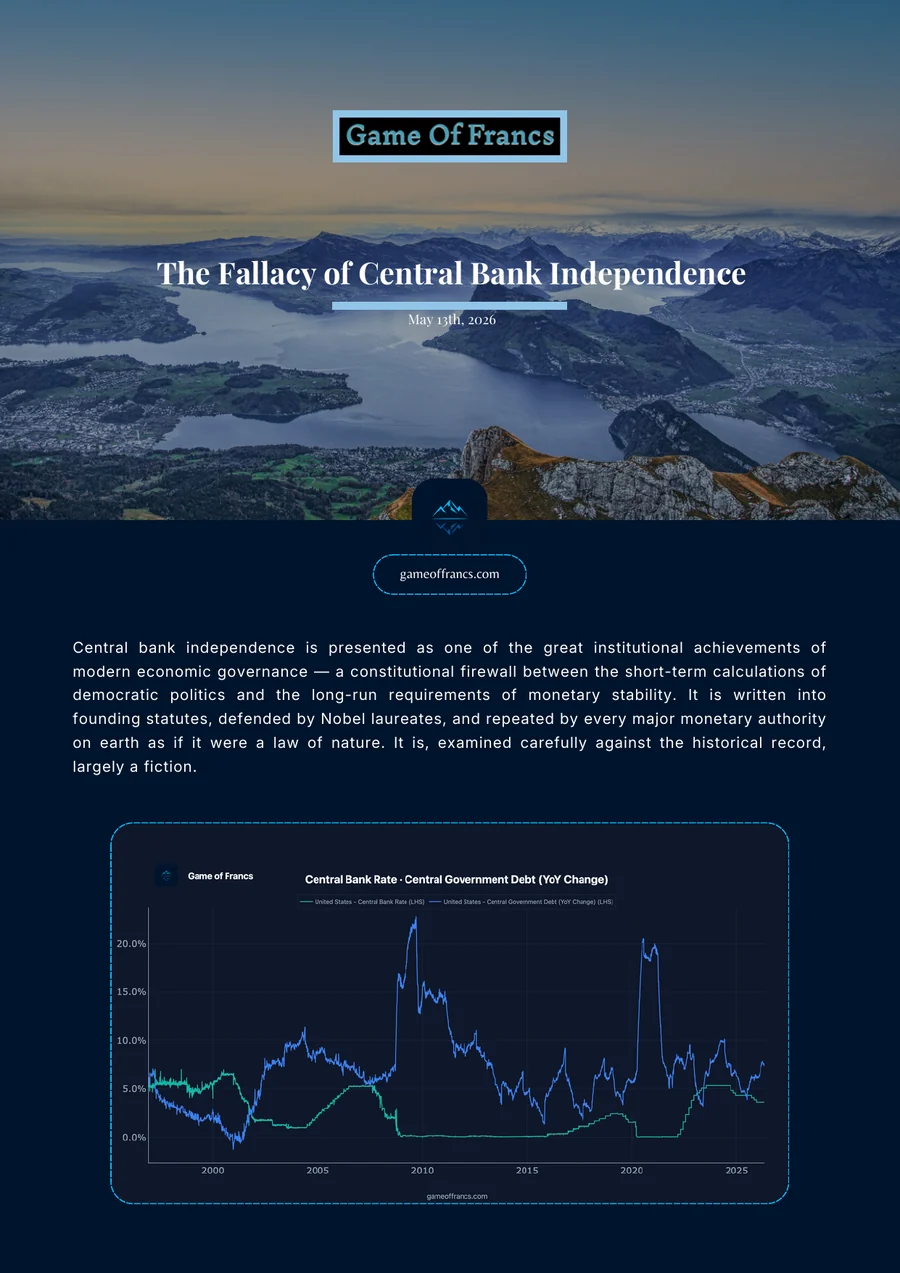
#5 - The Fallacy of Central Bank Independence

Central bank independence is presented as a constitutional firewall between democratic politics and monetary stability — written into founding statutes, defended by Nobel laureates, and repeated as if it were a law of nature. Examined against the historical record and the actual behaviour of the Fed, ECB, BoE, BoJ, and SNB, it is largely a fiction.

by Game Of Francs Research Team

MonetaryMay 6, 2026

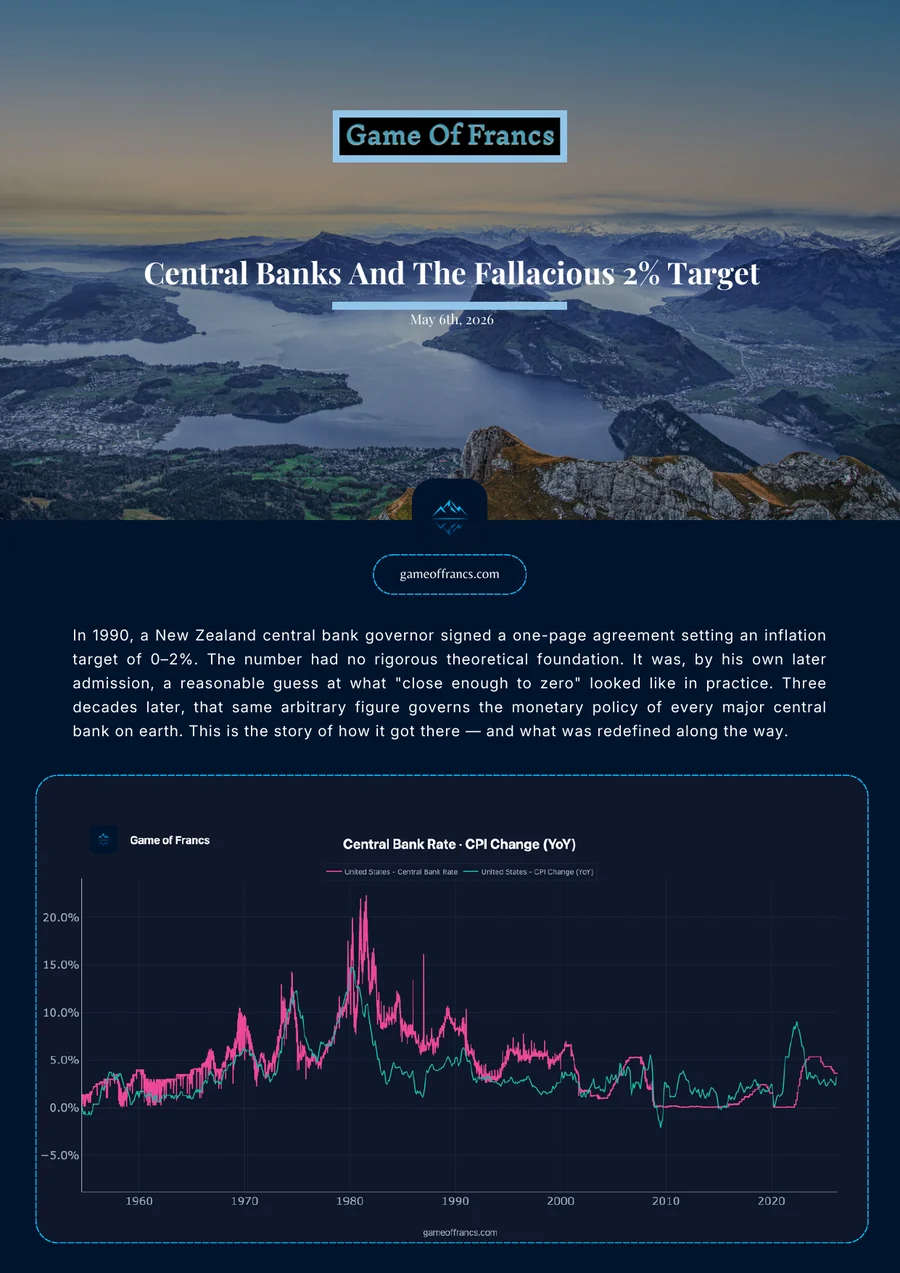
#4 - Central Banks And The Fallacious 2% Target

How a number with no theoretical foundation — picked in 1990 by a New Zealand central banker as a reasonable guess at "close enough to zero" — came to govern monetary policy worldwide, and the quiet redefinition of inflation itself that made it possible.

by Game Of Francs Research Team

MonetaryApr 29, 2026

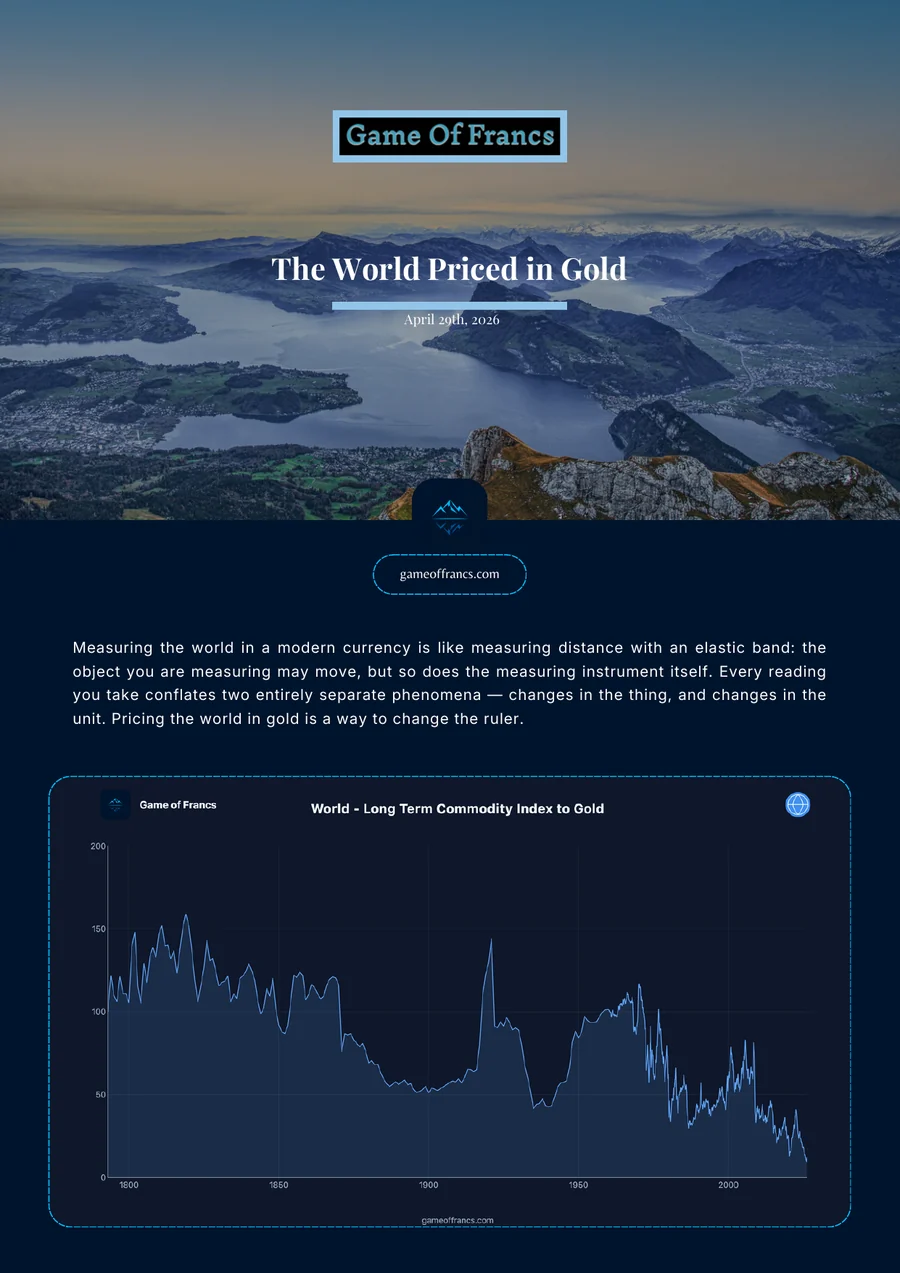
#3 - The World Priced in Gold

Measuring the world in fiat is like measuring distance with an elastic band — both the object and the ruler move. Pricing commodities, equities, and housing in gold changes the ruler and reveals a different macro picture, with August 15, 1971 as the inflection point.

by Game Of Francs Research Team

EnergyApr 15, 2026

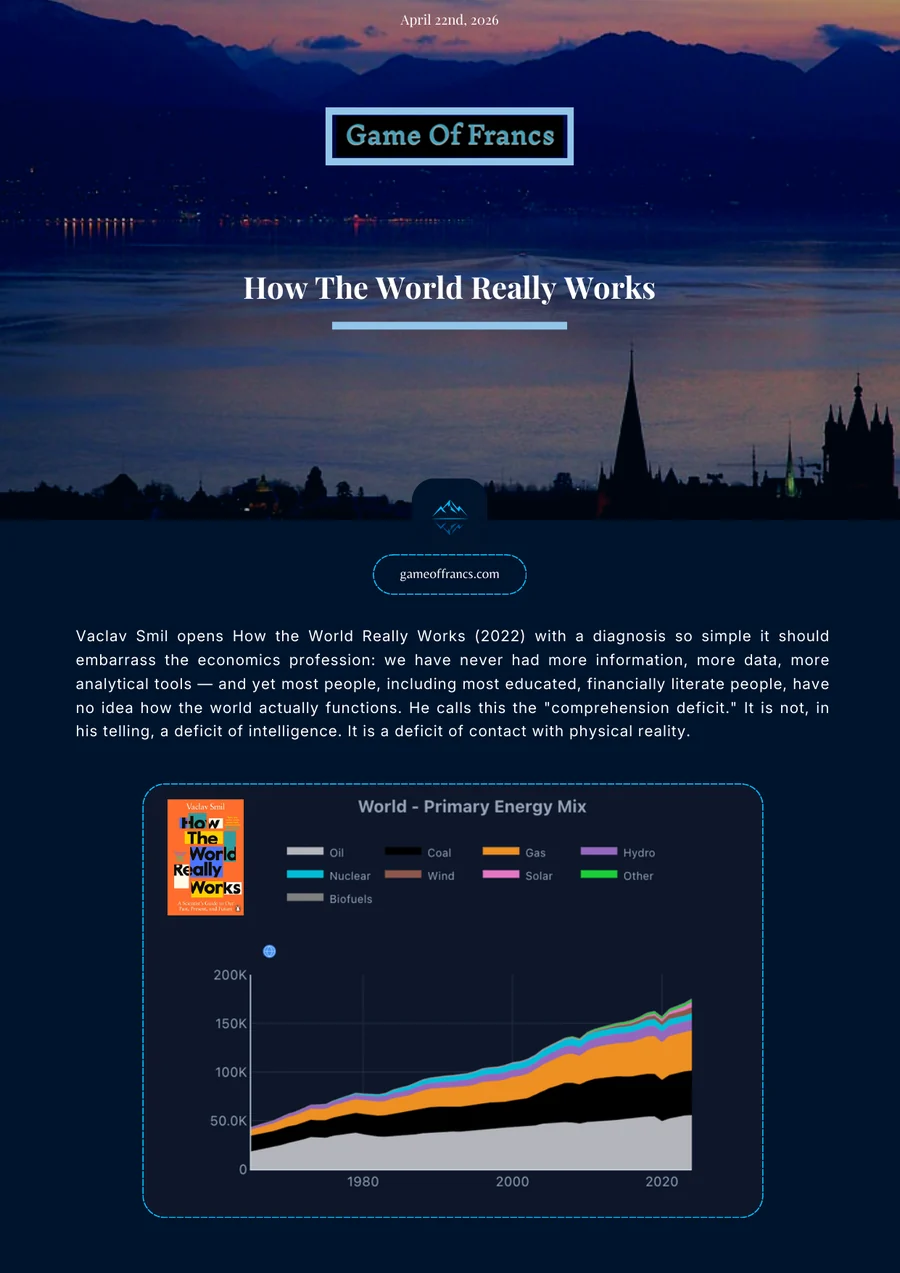
#2 - How The World Really Works

A macro reading of Vaclav Smil's How the World Really Works — energy as the master variable, the four pillars of civilization, and the physical foundations behind inflation, deglobalization, and the energy transition.

by Game Of Francs Research Team

MonetaryApr 15, 2026

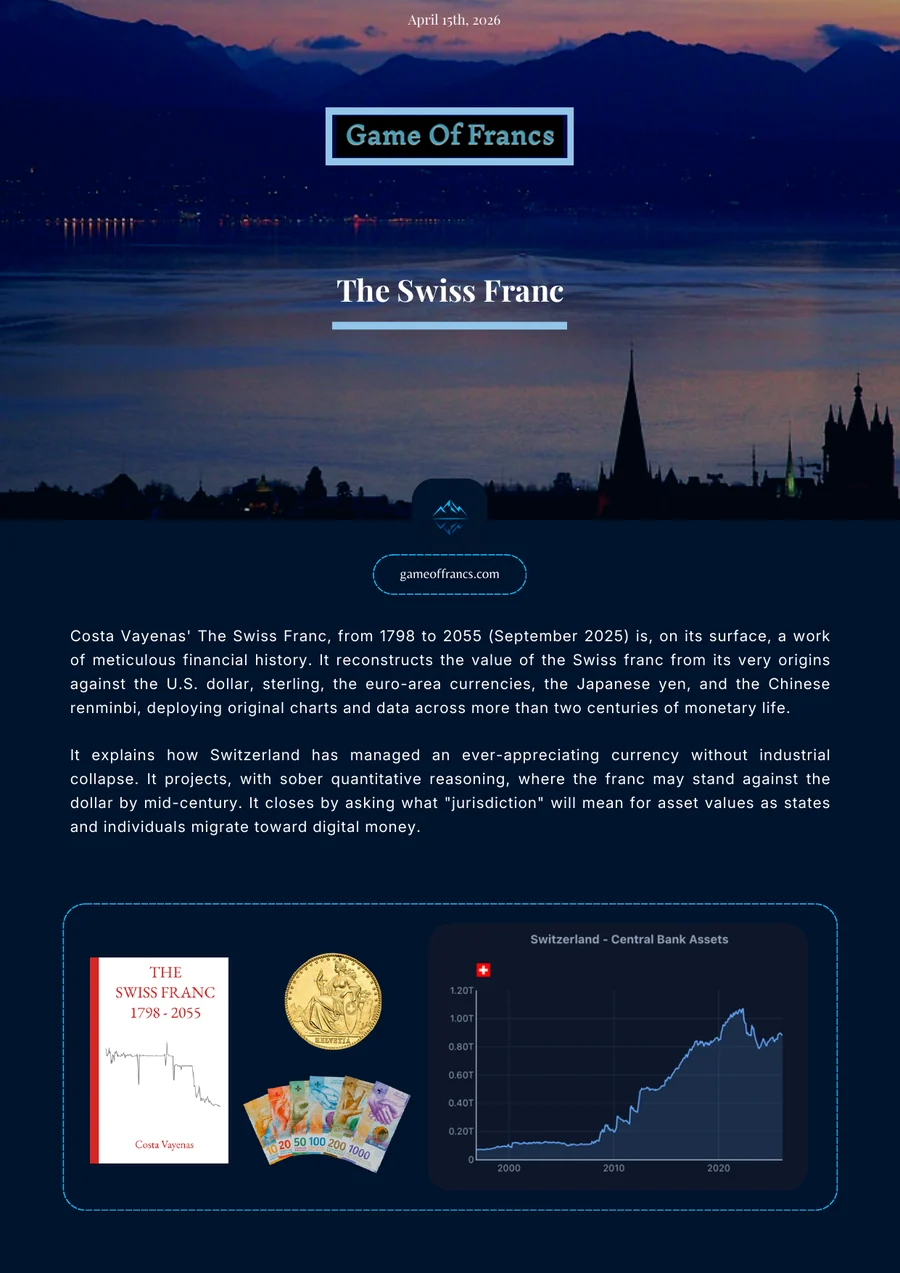
#1 - The Swiss Franc

First issue of the Game Of Francs article series: a deep dive into the Swiss Franc.

by Game Of Francs Research Team

Get the next article by email

One email when a new piece is published. Nothing else, and one-click unsubscribe from any message.