

#4 - Central Banks And The Fallacious 2% Target
How a number with no theoretical foundation — picked in 1990 by a New Zealand central banker as a reasonable guess at "close enough to zero" — came to govern monetary policy worldwide, and the quiet redefinition of inflation itself that made it possible.
by Game Of Francs Research Team
In 1990, a New Zealand central bank governor signed a one-page agreement setting an inflation target of 0–2%. The number had no rigorous theoretical foundation. It was, by his own later admission, a reasonable guess at what "close enough to zero" looked like in practice. Three decades later, that same arbitrary figure governs the monetary policy of every major central bank on earth. This is the story of how it got there — and what was redefined along the way.
I. The Most Powerful Number in Modern Finance
There is a number that governs the monetary conditions of more than a billion people, that central bank governors are summoned before parliaments to explain, that financial markets watch more obsessively than any earnings report or geopolitical development, that has shaped interest rates, exchange rates, credit conditions, and asset prices across the entire developed world for three decades.
That number is 2%.
It is treated, in contemporary monetary discourse, with something approaching the reverence of a natural constant. It appears in the mandates of the Federal Reserve, the European Central Bank, the Bank of England, the Bank of Japan, the Bank of Canada, and dozens of smaller central banks across the developed and emerging world. It is the lodestone of modern monetary policy — the target around which every interest rate decision, every asset purchase programme, every forward guidance statement is oriented.
And yet almost nobody, including many of the economists who defend it most vigorously, can provide a rigorous justification for why 2% is correct rather than 0%, or 1%, or 3%, or any other number. Its authority rests not on economic theory but on institutional inertia — the accumulated weight of three decades of repetition by the most powerful financial institutions in the world. The story of how 2% became the global monetary target is not a story of scientific discovery. It is a story of institutional accident, political convenience, and the quiet burial of an older and more honest definition of the word at the centre of the entire discussion.
That word is inflation. And what it means — what it used to mean, and what it was gradually redefined to mean — is the most important intellectual sleight of hand in the history of modern central banking.
II. Where 2% Came From: New Zealand, 1989
The global inflation target of 2% was not derived from economic theory. It was not the conclusion of a careful empirical analysis of the optimal rate of price increase for a modern economy. It was not even the recommendation of a particularly influential academic paper. It originated, in the late 1980s, in the most unlikely of places: New Zealand.
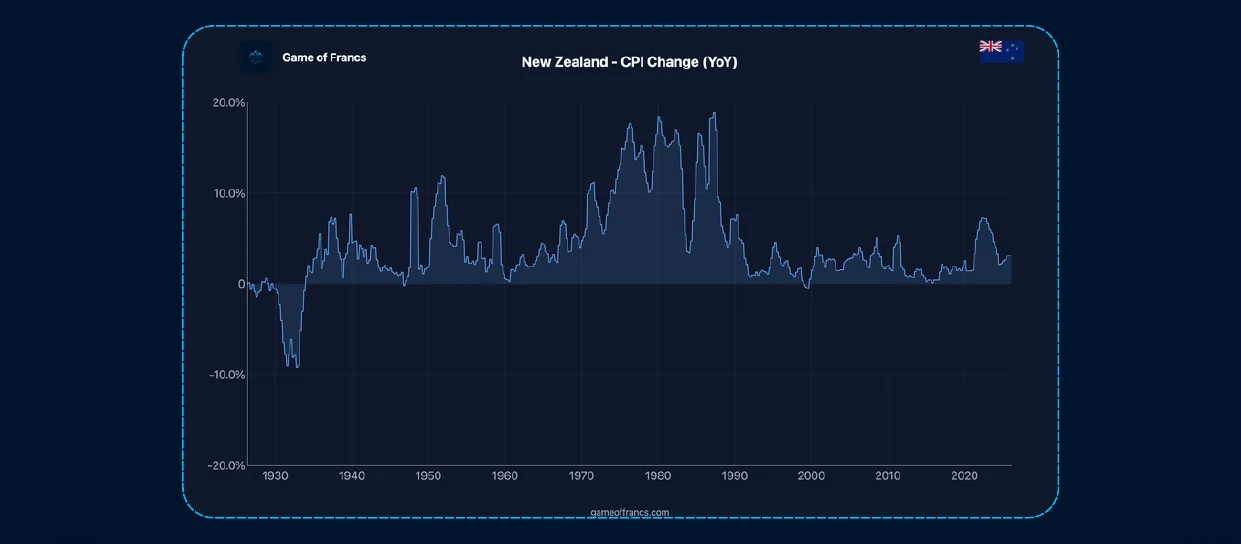
In 1989, New Zealand was emerging from a decade of serious macroeconomic dysfunction. Inflation had run persistently above 10% through much of the 1970s and 1980s. The New Zealand government, under Finance Minister Roger Douglas, was in the middle of a radical programme of economic liberalization — deregulation, privatization, fiscal consolidation — and was looking for an institutional framework that would signal its commitment to monetary discipline and restore credibility with international investors.
The Reserve Bank of New Zealand Act of 1989 was the result. It made price stability the explicit and singular mandate of the Reserve Bank and required the Governor to sign a Policy Targets Agreement with the Finance Minister specifying a numerical inflation range. The first agreement, signed by incoming Governor Don Brash in 1990, specified a target range of 0–2%.
The choice of 2% as the upper bound was, by the subsequent testimony of the participants themselves, largely pragmatic. There was no theoretical model that produced 2% as an optimum. The range was chosen because it was low enough to be credible as a commitment to price stability, and wide enough to give the central bank operational flexibility. Don Brash himself later acknowledged that the number had no deep scientific foundation — it was a reasonable guess at what "near enough to zero" looked like in practice.
From this accidental origin, the 2% target propagated with remarkable speed through the institutions of global central banking.
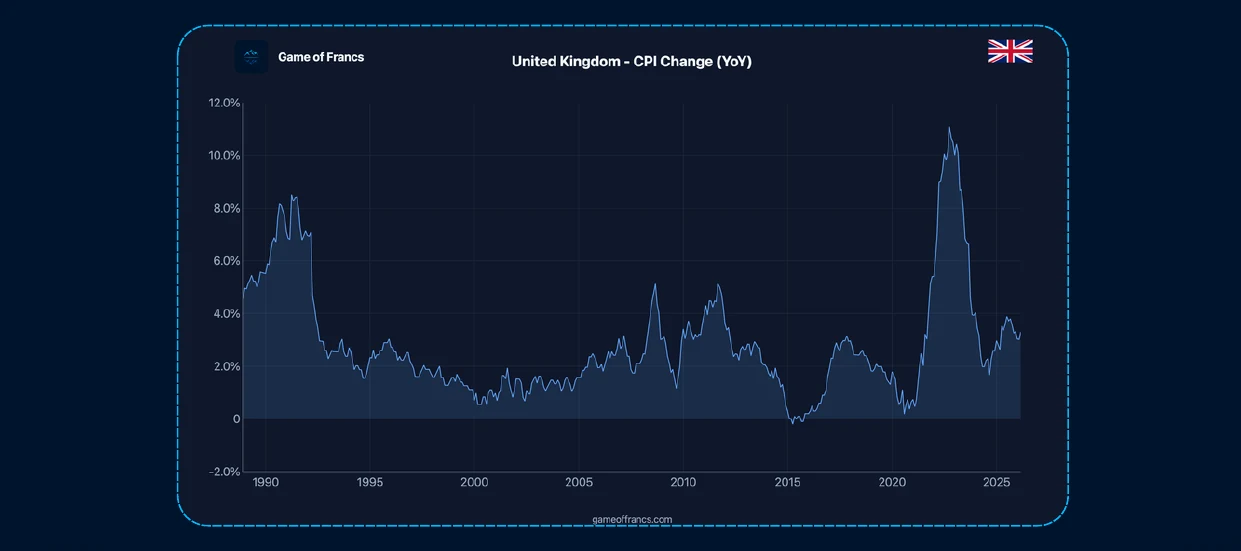
Canada adopted an inflation target of 1–3% in 1991, with the midpoint of 2% serving as the operational anchor. The United Kingdom followed in 1992, after the dramatic collapse of sterling's membership in the European Exchange Rate Mechanism forced the Bank of England to find an alternative nominal anchor to replace the exchange rate peg. The Bank of England's target was initially set at 1–4%, later narrowed to 2.5%, and eventually redefined in 2003 to a symmetric 2% target for the Consumer Price Index.
The European Central Bank, established in 1998, adopted a definition of price stability as inflation "below but close to 2%" — a formulation that was revised in 2021 to a symmetric 2% target, reflecting the institution's belated acknowledgment that inflation could deviate harmfully in both directions.
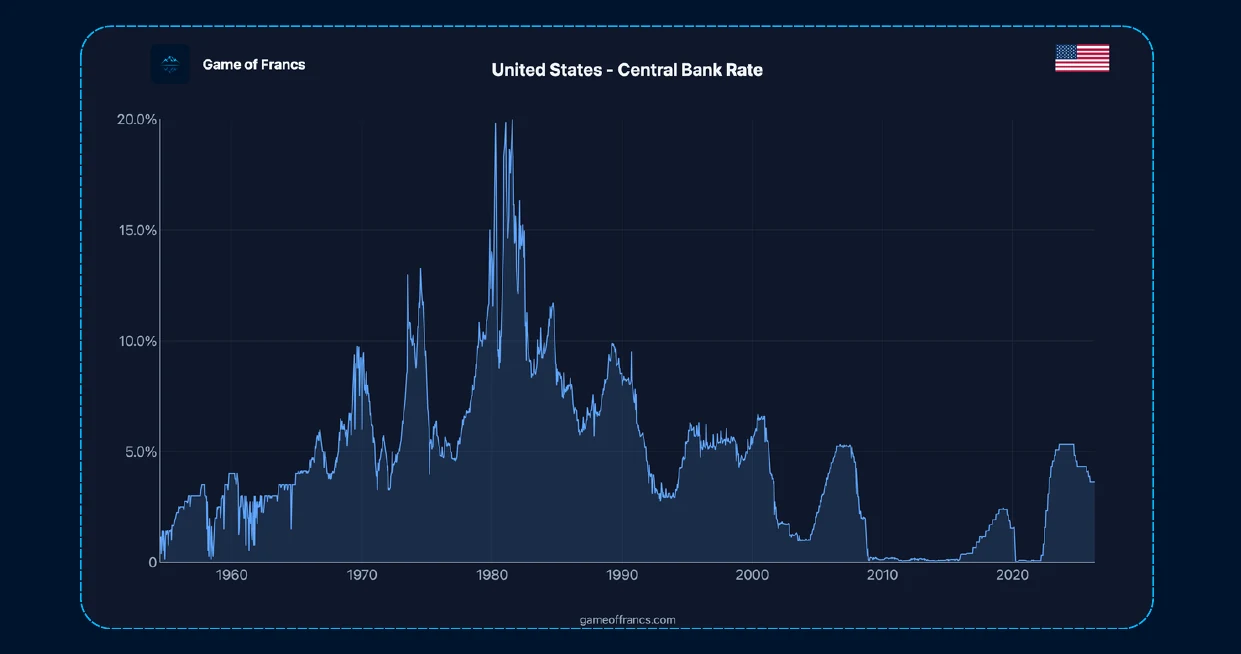
The Federal Reserve was, paradoxically, the last major central bank to formalize the 2% target explicitly. For decades, Federal Reserve chairmen from Greenspan onward operated with an informal understanding that something in the vicinity of 2% was desirable, but the institution resisted formal target-setting as an infringement on its dual mandate of price stability and maximum employment. It was only in January 2012, under Ben Bernanke, that the Federal Open Market Committee formally announced a 2% target for the PCE deflator as its long-run inflation objective. By that point, the 2% target had already been the de facto global monetary standard for two decades. Its formalization by the Fed was confirmation of an orthodoxy, not the establishment of one.
III. The Science That Wasn't
The speed with which 2% propagated through global central banking was not accompanied by a proportional development of the theoretical justification for it. The economic arguments marshalled in its defence were largely constructed after the fact — a post-hoc rationalization for a number that had already achieved institutional authority through repetition rather than rigour. The most commonly cited arguments for a positive inflation target, rather than zero, fall into three broad categories.
The first is the measurement bias argument. Standard price indices — the Consumer Price Index, the Harmonized Index of Consumer Prices, the Personal Consumption Expenditure deflator — are imperfect measures of the true cost of living. They are slow to capture quality improvements, they handle the introduction of new goods imperfectly, and they are subject to substitution biases that cause them to overstate the true inflation experienced by consumers. On this argument, a measured inflation rate of 2% may be consistent with a "true" inflation rate closer to zero, once measurement imperfections are corrected for.
This argument has some merit as a technical point. But it is worth noting what it implies: that central banks are explicitly targeting a measurement error. The 2% target is calibrated not to achieve 2% actual price increase but to achieve zero actual price increase while producing a 2% reading on an imperfect instrument. This is a far more fragile foundation for a major institutional commitment than its casual deployment in central bank communications would suggest.
The second argument is the zero lower bound argument, developed most extensively in the aftermath of the Japanese deflation of the 1990s and the near-zero interest rate environment that followed the 2008 financial crisis. The logic is as follows: in a world of sufficiently low inflation, nominal interest rates will also be low, which limits the central bank's ability to stimulate the economy by cutting rates in response to a recession. A positive inflation buffer gives the central bank more room to manoeuvre — more distance between the prevailing nominal rate and the zero lower bound.
This argument is more technically sophisticated, but it contains a significant circularity. The problem it identifies — insufficient room to cut rates — is itself a consequence of the central bank's prior policy choices. It is an argument for maintaining a positive inflation rate as insurance against the consequences of having maintained too low an inflation rate in the past. It provides no independent justification for 2% specifically, as opposed to 1% or 3%, and it treats the zero lower bound as an immovable constraint rather than an institutional choice that could itself be revised.
The third argument is the wage rigidity argument. Workers and employers resist nominal wage cuts more strongly than they resist real wage cuts — a well-documented psychological asymmetry. In a world of zero inflation, labour markets would require frequent nominal wage reductions to achieve the relative wage adjustments that economic shocks demand, and those reductions would be resisted, producing unemployment. A positive inflation rate allows real wages to adjust downward without requiring nominal wage cuts, lubricating the labour market and reducing structural unemployment.
This argument also has technical merit, but it proves too much. If 2% of annual inflation is the right lubricant for labour market adjustment, why not 3%? Or 4%? The argument provides no natural stopping point and no principled rationale for the specific number around which global monetary policy has organized itself.
The uncomfortable truth is that none of these arguments, individually or collectively, produces 2% as a rigorously derived optimum. They provide a range of reasons why some positive inflation might be preferable to zero, but the choice of 2% within that range remains as arbitrary as it was when Don Brash signed the first Policy Targets Agreement in Wellington in 1990.
IV. The Redefinition: From Money to Prices
But the arbitrariness of the 2% target is, in a sense, the secondary problem. The primary problem is more fundamental, and it concerns a linguistic and conceptual transformation that took place gradually, without announcement, over the course of the 20th century — a transformation that made the 2% target not merely arbitrary but structurally misleading.
The word inflation did not originally mean rising prices.
This is not a pedantic etymological point. It is the most important intellectual issue in the entire debate about monetary policy, and its implications extend far beyond the academic study of semantics.
In the classical tradition of political economy — from David Hume and David Ricardo through John Stuart Mill and into the late 19th century — inflation referred to an expansion of the money supply. The word derives from the Latin inflare: to blow into, to inflate, to expand. An inflated money supply was one that had been expanded beyond the requirements of legitimate economic activity — typically through the issuance of additional paper currency not backed by gold or silver, or through the expansion of bank credit beyond the underlying reserve base.
This definition had a precise and important virtue: it described a cause. Monetary inflation — the expansion of the money supply — was the action, and rising prices were among its consequences. The relationship between the two was not mechanical or immediate; prices could rise for many reasons unrelated to monetary expansion, and monetary expansion could produce consequences — asset price inflation, malinvestment, credit bubbles — that did not immediately manifest in consumer price indices. But the causal sequence was clear: expand the money supply, and you set in motion processes that would, over time and through the Cantillon effects that Richard Cantillon had described in the 18th century, redistribute purchasing power and eventually raise the general price level.
The Austrian economists of the early 20th century — Ludwig von Mises above all — were insistent on this definitional precision. In The Theory of Money and Credit (1912) and throughout his subsequent work, Mises distinguished rigorously between the inflationary act — monetary expansion — and its various consequences, of which rising consumer prices was only one, and not always the most important or the most immediate. For Mises, the evil of inflation was not primarily that it raised the price of bread. It was that it distorted the structure of relative prices throughout the economy, generating false signals that led entrepreneurs to misallocate capital — the Business Cycle Theory, which located the cause of boom-bust cycles in credit expansion beyond the level of genuine savings.
Murray Rothbard, writing in the second half of the 20th century, was even more emphatic. In What Has Government Done to Our Money? (1963), he described the redefinition of inflation from its monetary meaning to its price-level meaning as one of the most consequential and deliberate acts of intellectual obfuscation in the history of economic policy. If inflation means rising prices, he observed, then the remedy for inflation is whatever brings prices down — price controls, supply-side interventions, the management of expectations. The monetary cause of the phenomenon disappears from the analytical frame. The central bank, which creates the money, escapes the indictment. The debate shifts from whether money should be expanded to how much expansion is acceptable before prices rise too fast — a question that already concedes the legitimacy of the expansion itself.
V. CPI: The Instrument That Defines the Target
The 2% inflation target is only as meaningful as the price index used to measure it. And the history of consumer price index construction in the 20th century is, in important respects, a history of methodological choices that systematically lowered the measured inflation rate relative to any intuitive notion of the cost of living.
The most significant of these methodological innovations were introduced into the U.S. Consumer Price Index in the 1980s and 1990s, largely on the recommendation of the Boskin Commission — a panel convened in 1995 by the Senate Finance Committee to assess the accuracy of CPI measurement. The Commission concluded that the CPI overstated true inflation by approximately 1.1 percentage points annually, due to a combination of substitution bias, outlet substitution, quality adjustment, and new product bias.
The methodological reforms that followed — hedonic quality adjustments, geometric weighting, and the treatment of substitution — had the practical effect of producing lower measured inflation figures for any given set of underlying price changes. Whether they produced more accurate inflation figures is a matter of genuine technical dispute. What is not disputed is that they moved the measured index systematically downward.
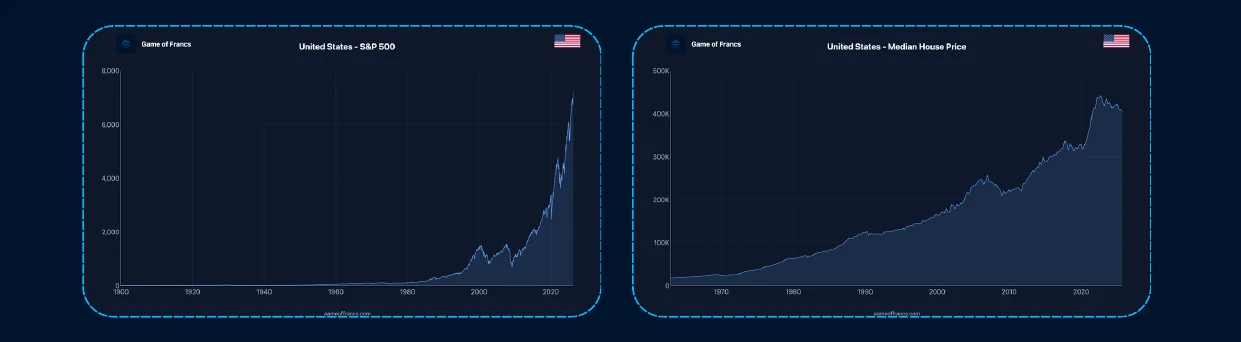
The treatment of housing costs is perhaps the most significant structural peculiarity of modern price indices. In the U.S. CPI, the cost of owner-occupied housing is not measured by actual house prices — which roughly tripled in real terms between 1990 and 2006, and have risen dramatically again in the decade since 2012. It is measured by "owners' equivalent rent" — a survey-based estimate of what homeowners believe they could charge to rent their own homes. This methodological choice insulates the measured inflation rate from the most dramatic asset price inflation of the modern era, producing the paradox of a central bank declaring victory over inflation while the population's primary expense — housing — is escalating at rates that would, under any older definition, constitute severe inflation.
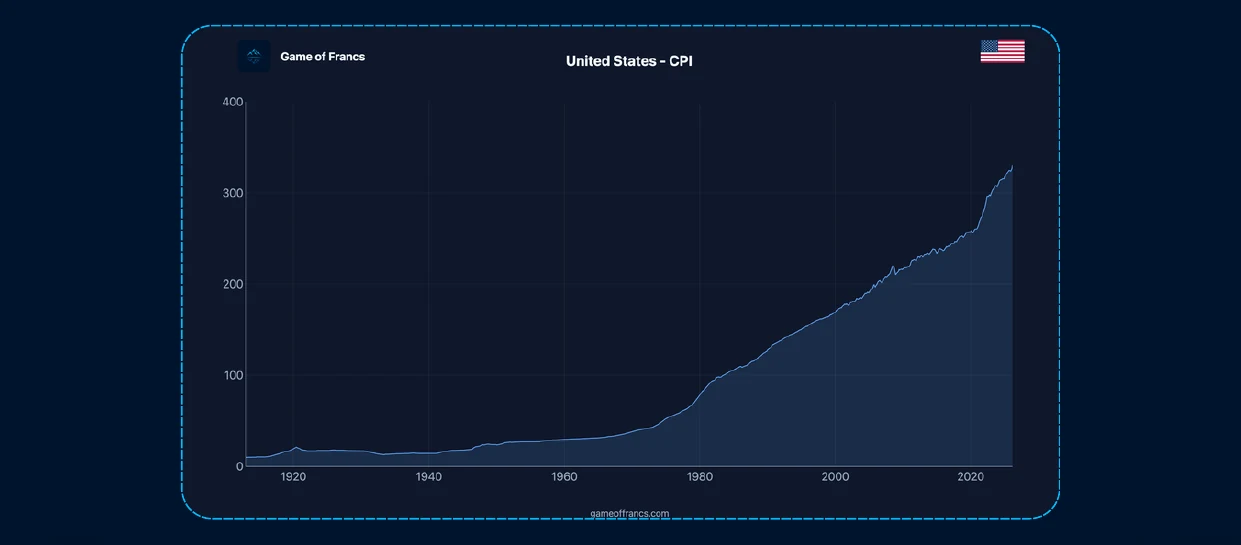
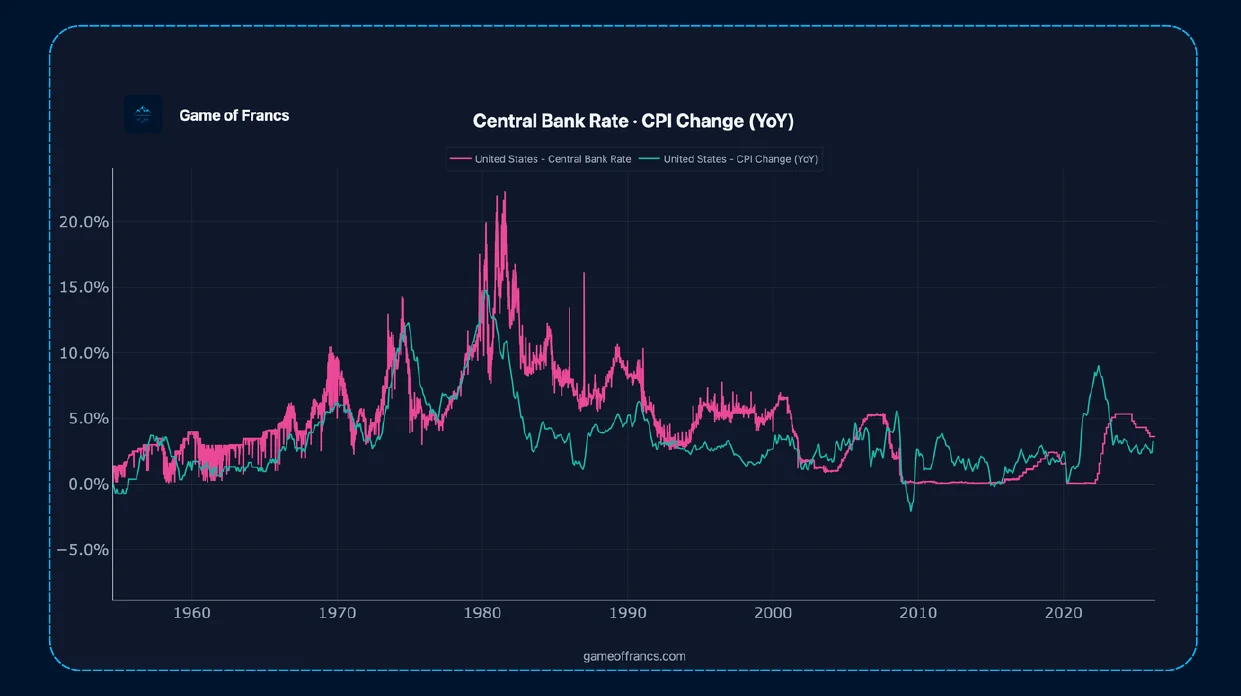
The post-2010 phenomenon of extraordinary asset price inflation coexisting with subdued measured CPI inflation was not a mystery of the economic universe. It was the predictable consequence of channelling monetary expansion into financial assets and real estate rather than into the consumer goods basket measured by the price index. The money was inflationary in the older, monetary sense. The index did not record it. And the 2% target, defined in terms of the index, declared the era one of successful price stability.
VI. The Target as License
The political economy of the 2% inflation target is straightforward once you recognize what the target actually permits, as opposed to what it nominally constrains.
A 2% annual inflation target does not restrict money creation. It permits money creation up to the point at which the consumer price index rises at 2% per year. Whatever monetary expansion is required to produce that rate of measured price increase is, by definition, within the target. Whatever monetary expansion can be undertaken without raising measured prices above 2% — because the new money flows into asset markets, or because supply-side forces are simultaneously deflationary — is not merely permitted but may be actively pursued in the name of "achieving the target."
This creates an asymmetric institutional incentive that is worth stating explicitly. Central banks that allow inflation to fall below 2% are failing their mandate and face political and institutional pressure to ease policy. Central banks that allow inflation to rise above 2% are also failing their mandate. But the failure modes are not symmetric in practice. The fear of deflation — of falling into the Japanese trap of the 1990s — has consistently dominated central bank thinking in the post-2008 era, producing a systematic bias toward expansion and toward the lower bound of the target as an active policy objective rather than a lower constraint.
The result is that the 2% target, in practice, functions less as a ceiling on acceptable inflation than as a floor. Central banks that achieve exactly 2% are meeting their mandate. Central banks that achieve 1% are underperforming. The institutional imperative, embedded in the target's symmetry and reinforced by the political consequences of deflation, is to keep the printing press running at whatever rate is necessary to push measured inflation up to the target.
Goodhart's Law — Charles Goodhart's observation that any measure which becomes a policy target ceases to be a good measure — applies with particular force to the 2% target. The CPI, once it became the instrument through which monetary policy was assessed, became subject to the methodological choices, political pressures, and substitution effects that inevitably follow when a measure acquires the status of an institutional objective. The history of CPI methodology since the 1990s is, among other things, a history of those pressures operating on the instrument.
VII. What the Money Supply Actually Did
The most direct way to assess the 2% inflation target against the older monetary definition of inflation is simply to look at what central bank balance sheets and broad money aggregates have done in the era of inflation targeting. The numbers are not subtle.
Between 1990 — roughly the beginning of the global inflation targeting era — and 2024, the Federal Reserve's balance sheet expanded from approximately $300 billion to over $7 trillion, a more than twenty-fold increase. The European Central Bank's balance sheet grew from zero at its establishment in 1998 to over $8 trillion at its peak. The Bank of Japan's balance sheet exceeded the size of Japan's entire GDP. The Bank of England's balance sheet grew by a factor of ten between 2008 and 2022.
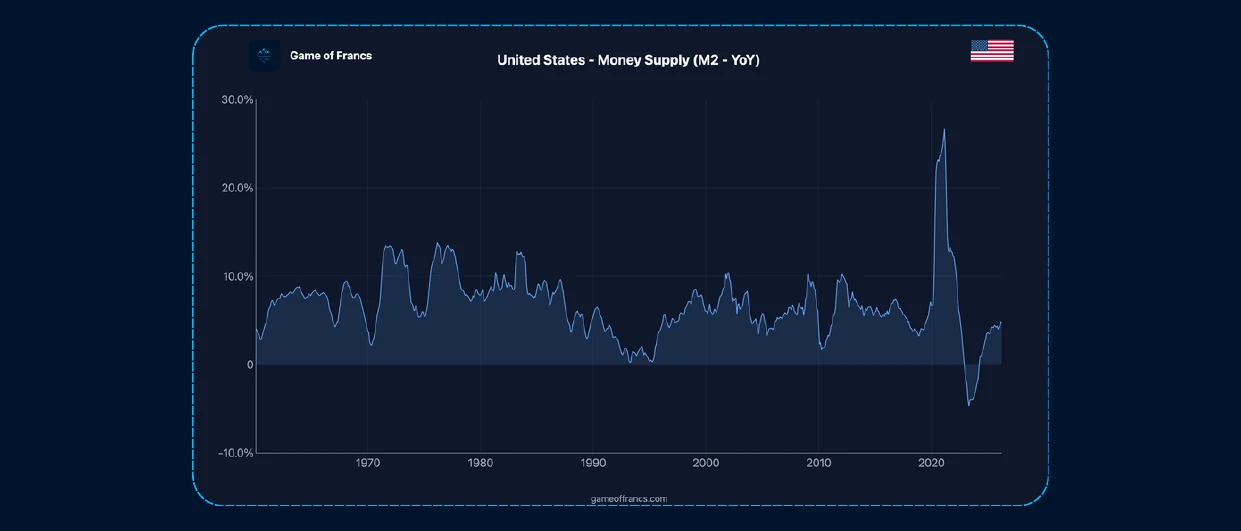
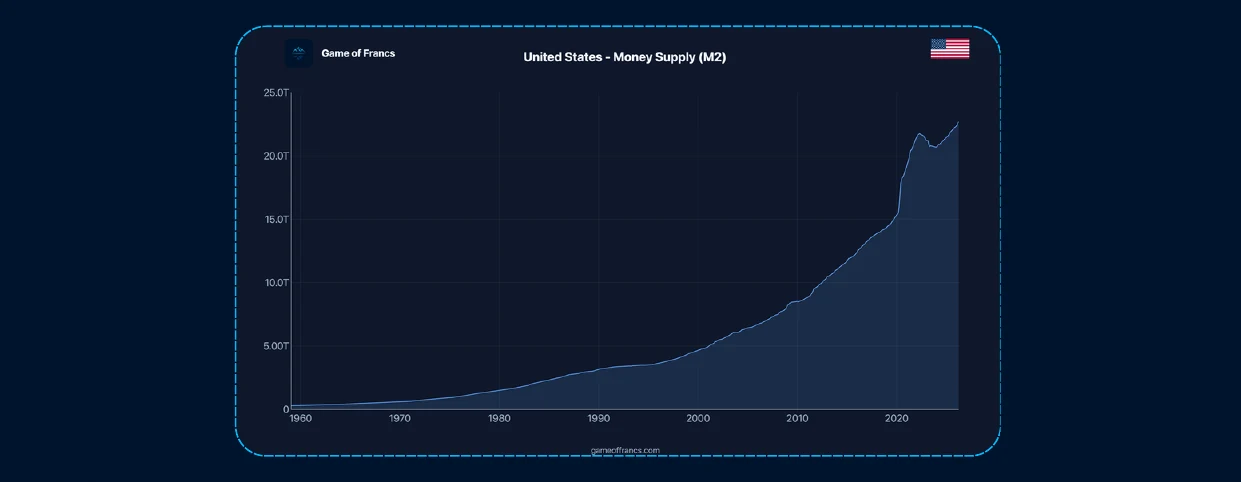
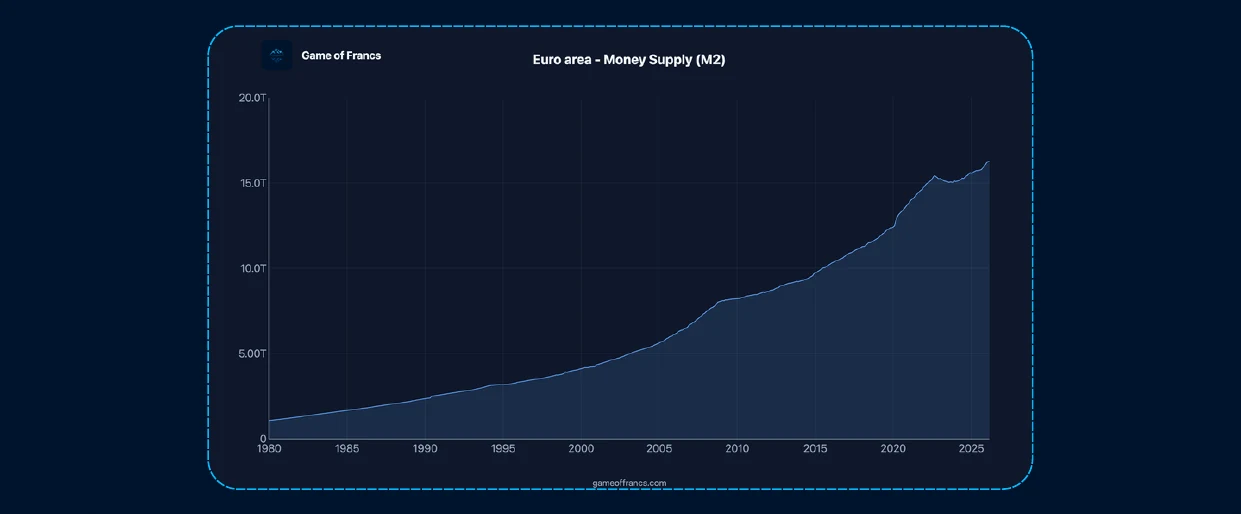
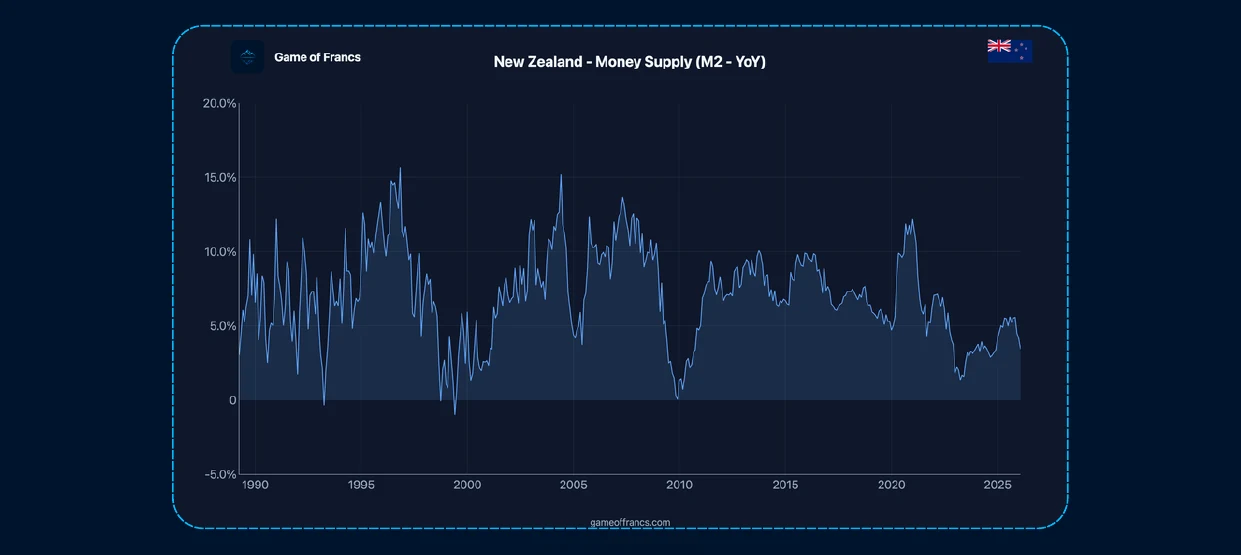
Broad money measures tell a similar story. M2 in the United States grew from roughly $3.2 trillion in 1990 to over $21 trillion by 2022 — a six-fold expansion over three decades. In the eurozone, broad money grew at persistent rates that, applied over the three-decade span of ECB history, produced a dramatic cumulative expansion of the euro money stock.
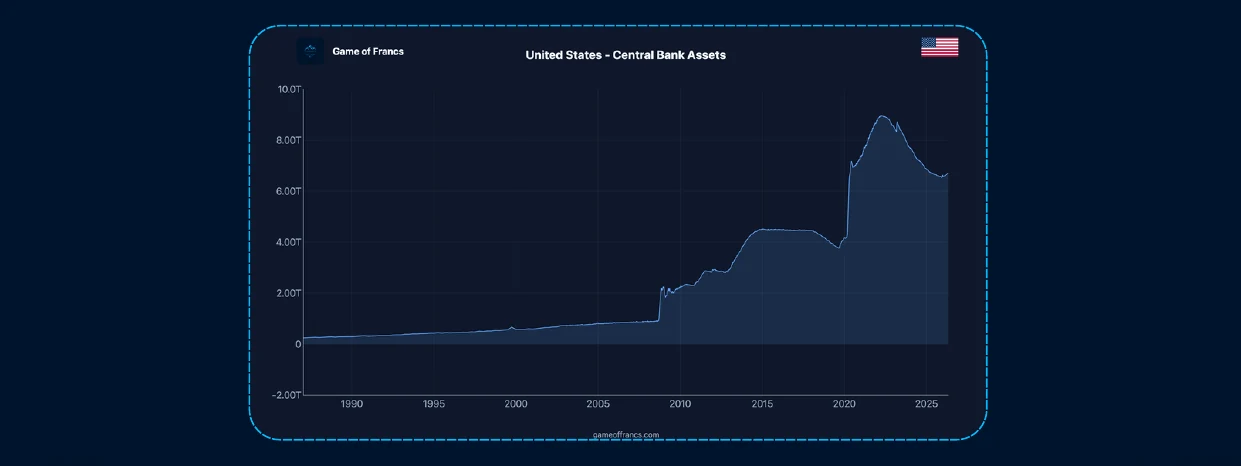
In the original, monetary definition of the term, this is an era of extraordinary inflation. The quantity of money in existence expanded at rates that, applied to any pre-Keynesian standard, would have been recognized as severely inflationary monetary policy.
That this expansion did not produce proportional consumer price inflation — at least until the post-COVID episode of 2021-2023 — reflects the particular channels through which the new money flowed, rather than any evidence that monetary expansion was not occurring. Global goods deflation, driven by the integration of China into the world trading system, absorbed much of the inflationary pressure that would otherwise have appeared in consumer price indices. Asset prices — equities, real estate, bonds — absorbed another very large portion. The CPI, measuring a basket of consumer goods weighted toward items subject to both Chinese competition and hedonic adjustment, remained relatively subdued.
But the monetary inflation was there. It produced the greatest equity bull market in recorded history, a global real estate boom of unprecedented scale, and a bond market rally that compressed yields to levels without historical precedent — consequences that an older definition of inflation would have identified immediately and that the modern CPI-based framework systematically failed to register.
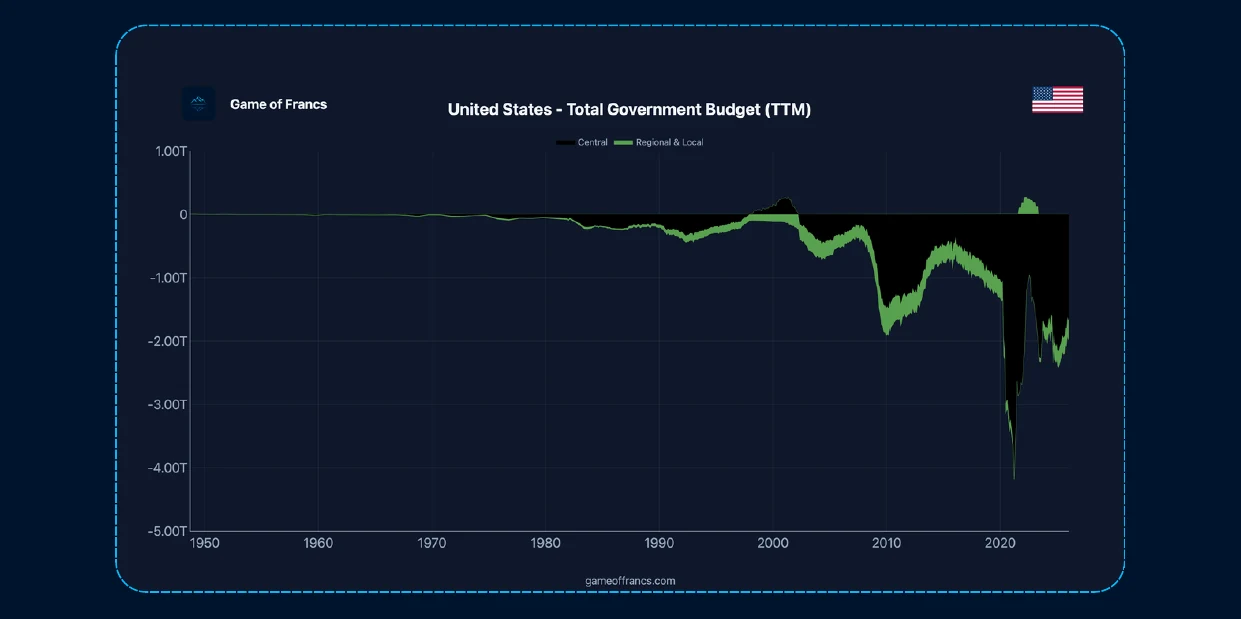
The bill came due in 2021. The COVID shock disrupted precisely the global supply chains that had been absorbing the inflationary pressure of three decades of monetary expansion. When the deflationary offset was removed and a simultaneous demand surge was funded by direct fiscal transfers financed by central bank money creation, the consumer price index finally registered what the money supply had been doing for years. The inflation that the 2% target declared absent arrived with unusual force, at a moment of unusual vulnerability, having been building in the monetary system for longer than the CPI had been willing to acknowledge.
VIII. The Austrians Were Right About the Definition
The Austrian School's insistence on the monetary definition of inflation was not merely definitional fastidiousness. It was a prediction about what would happen if the definition were changed.
Mises argued, throughout his career, that the redefinition of inflation from its monetary meaning to its price-level meaning would have specific, identifiable consequences. It would obscure the connection between money creation and economic distortion. It would concentrate public attention on consumer prices rather than on the structure of credit and the allocation of capital. It would provide central banks and governments with a metric they could claim to manage successfully while engaging in the very monetary expansion that the original definition was designed to identify and constrain. And it would produce recurring cycles of artificial boom — driven by credit expansion that the CPI did not register as inflationary — followed by painful corrections when the distortions accumulated by the expansion became unsustainable.
The post-2008 era is a precise description of what Mises predicted. The credit expansion of the 2000s, which the 2% target declared non-inflationary, produced the distortions in real estate, mortgage finance, and bank leverage that collapsed in 2008. The response to that collapse — the extraordinary monetary expansion of the 2010s, which the 2% target again declared non-inflationary because the CPI remained subdued — produced the asset price distortions and the misallocation of capital that are now unwinding in equity markets, real estate, and the venture capital complex. The 2% target did not prevent these cycles. It provided the institutional cover under which they were allowed to develop.
Rothbard's point about the political convenience of the definitional shift is equally borne out by the institutional history. Governments that run persistent fiscal deficits require financing. In a world where inflation is defined monetarily, central bank financing of government deficits is immediately and explicitly inflationary — a debasement of the currency visible in the definition of the term. In a world where inflation is defined as rising consumer prices, the same financing is non-inflationary as long as the CPI remains below 2% — and can even be presented as a policy success if it helps push a below-target index toward the target. The redefinition did not merely change the vocabulary. It changed the political economy of the entire relationship between fiscal authorities and central banks.
IX. Conclusion: The Comfortable Illusion
The 2% inflation target is one of the most successful pieces of institutional marketing in the history of economic policy. It took an arbitrary number, derived from a pragmatic compromise in New Zealand in 1990, and transformed it — through three decades of repetition, formalization, and coordination among the world's most powerful financial institutions — into something that has the appearance of a scientific standard and the authority of a legal mandate.
It achieved this success, in part, by presiding over a definitional transformation that removed from public discourse the most important question in monetary economics: not what is happening to the price of a basket of consumer goods, but what is happening to the quantity of money and the structure of credit through which economic calculation takes place.
In the original, monetary definition, the past three decades have been an era of extraordinary and sustained inflation — the greatest sustained expansion of money and credit in recorded peacetime history, producing distortions in asset prices, capital allocation, and the distribution of wealth that are still working themselves through the global economy.
Restoring honesty to monetary discourse does not require a revolution in institutional arrangements. It requires only what the best analytical traditions in economics have always demanded: the willingness to define terms clearly, to ask what a measure actually measures, and to resist the comfortable illusion that a number, repeated often enough by sufficiently authoritative institutions, becomes a truth. In the end, one must understand that central bankers are politicians and are involved in the power games inside country and outside of it.
Get the next article by email
One email when a new piece is published. Nothing else, and one-click unsubscribe from any message.