

#2 - How The World Really Works
A macro reading of Vaclav Smil's How the World Really Works — energy as the master variable, the four pillars of civilization, and the physical foundations behind inflation, deglobalization, and the energy transition.
by Game Of Francs Research Team
Vaclav Smil opens How the World Really Works (2022) with a diagnosis so simple it should embarrass the economics profession: we have never had more information, more data, more analytical tools — and yet most people, including most educated, financially literate people, have no idea how the world actually functions. He calls this the "comprehension deficit." It is not, in his telling, a deficit of intelligence. It is a deficit of contact with physical reality.
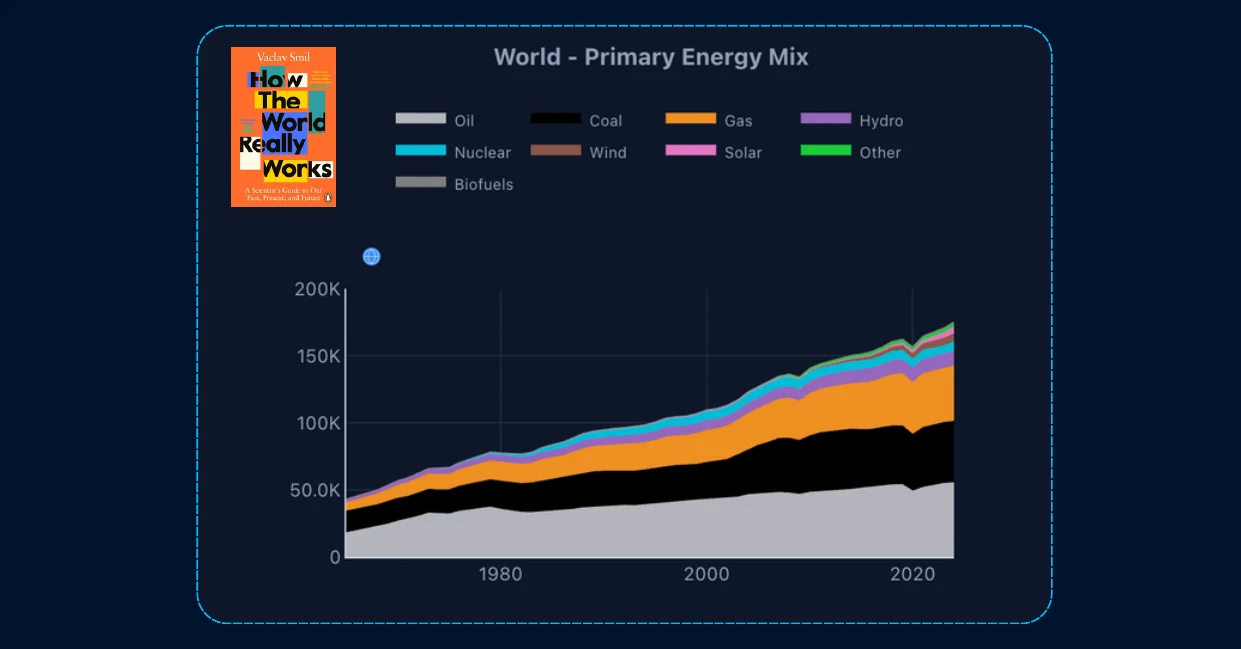
Smil is not primarily an economist. He is a Distinguished Professor Emeritus of Environment at the University of Manitoba, the author of more than forty books on energy, food, materials, and the biosphere, and the only non-fiction writer that Bill Gates has described as someone whose books he looks forward to more than anyone else's. His framework is resolutely physical: he counts calories, joules, tons, and watts. He is allergic to narratives that ignore the thermodynamic and material constraints of the real world.
And yet How the World Really Works is, at its heart, one of the most important macro texts of the past decade — precisely because it is not written by an economist. It describes, with brutal quantitative clarity, the physical foundations on which every GDP figure, every inflation reading, every energy price, every trade surplus, and every central bank model ultimately rests. It says, politely but unmistakably, that modern macroeconomics has built its models on top of a layer of physical reality it barely bothers to examine.
I. Energy Is Not a Sector — It Is the Economy
The first and most foundational claim in Smil's book is one that mainstream economics has systematically underweighted for the better part of fifty years: energy is not simply one input among many. It is the master variable — the prerequisite for every other form of economic activity.
Smil documents that the increasingly efficient use of fossil fuel supplies over the past two centuries has produced, in his calculation, roughly a 3,500-fold increase in the availability of useful energy. Every advance in agricultural productivity, in manufacturing throughput, in transportation speed, in communication bandwidth — all of it rests on this foundation. In his formulation, we are not a technological civilization that happens to use energy. We are an energy civilization that uses technology to extract, convert, and deploy it.
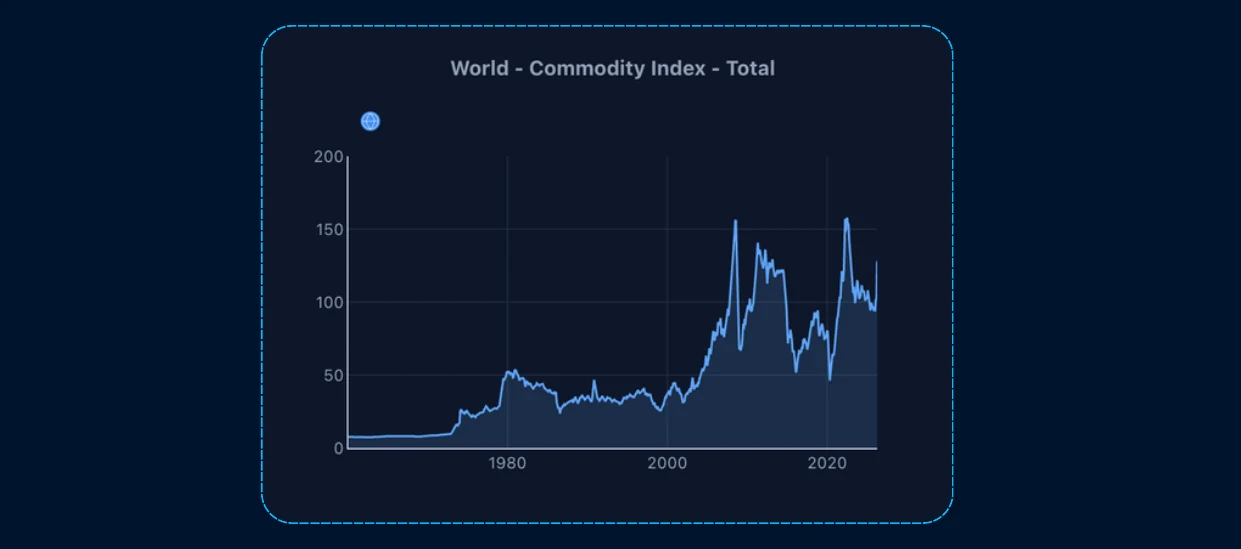
When oil prices double, they do not merely raise the cost of petrol at the pump. They raise the cost of producing ammonia (the feedstock of synthetic fertilizers), which raises the cost of food. They raise the cost of running electric arc furnaces, which raises the cost of steel. They raise the cost of shipping containers, which raises the cost of everything traded internationally. They raise the cost of plastics production, which raises the cost of packaging, medical supplies, electronics, and construction materials.
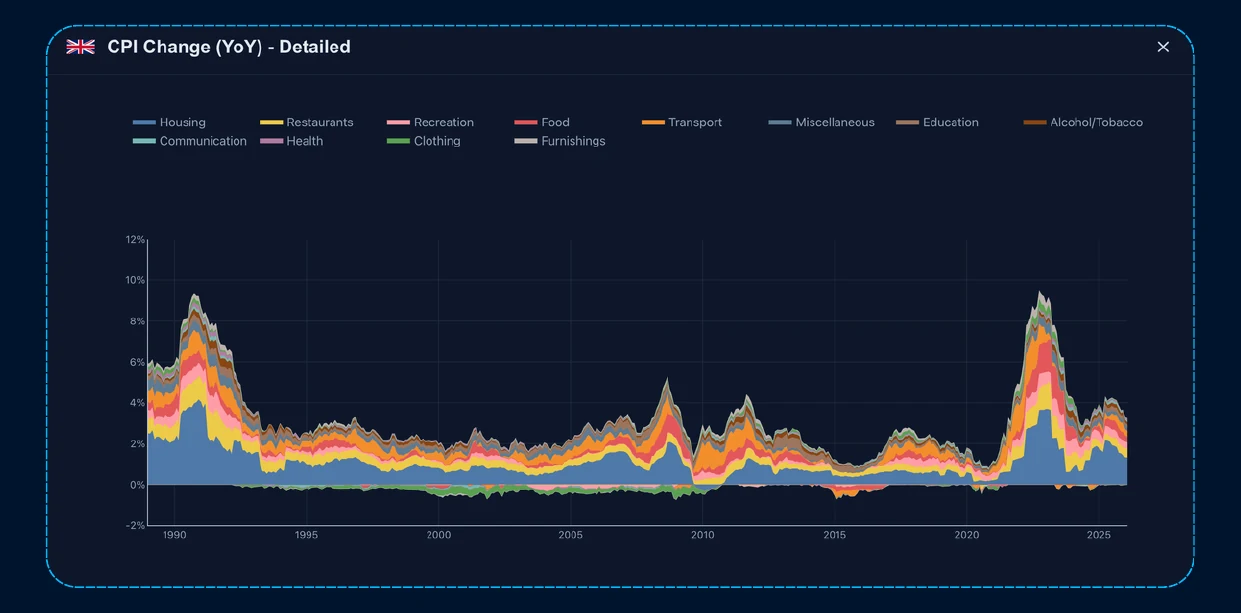
The 2021–2023 inflation episode — which caught most central banks so badly off-guard that they described it initially as "transitory" — was, in Smil's framework, entirely predictable. It was not primarily a monetary phenomenon. It was an energy price shock propagating through exactly the chain of physical dependencies he describes. The Russian invasion of Ukraine in February 2022 drove European natural gas prices to ten times their pre-war level. Natural gas is the primary feedstock for Haber-Bosch ammonia synthesis. Ammonia is the basis of synthetic nitrogen fertilizer. Synthetic nitrogen fertilizer feeds, directly or indirectly, roughly half of humanity. The transmission mechanism from a pipeline shutdown in Siberia to a baguette in a Parisian bakery is not abstract. It is chemical and thermodynamic. Smil had drawn the map years before the crisis arrived.
The Federal Reserve's and ECB's models, built around demand-side Phillips Curve dynamics and monetary aggregates, had no adequate representation of this propagation. They could not, because those models treat energy as an exogenous shock to be held constant rather than as the structural foundation of the price system. The comprehension deficit Smil diagnoses in the public is not absent in central banks. It is institutionalized there.
II. The Four Pillars and the Illusion of Immaterial Prosperity
At the center of Smil's book is his account of what he calls the four pillars of modern civilization: ammonia, steel, cement, and plastics. These are not glamorous. They are not the subject of TED talks or venture capital pitches. But in 2019, the world consumed approximately 4.5 billion tons of cement, 1.8 billion tons of steel, 370 million tons of plastics, and 150 million tons of ammonia. These substances are, collectively, the physical substrate of everything: our cities, our roads, our food systems, our hospitals, our water infrastructure, our energy generation equipment.
Every single one of them is deeply, structurally, existentially dependent on fossil fuels — not merely as an energy source, but as a feedstock. Plastics are hydrocarbons by definition: they are made from oil and gas. Ammonia synthesis combines atmospheric nitrogen with hydrogen derived almost entirely from natural gas. Steel production, even the more efficient electric arc furnace variety, consumes as much electricity per day as a mid-sized American city. Cement production releases CO₂ not only from the burning of fossil fuels but from the chemical decomposition of limestone itself — a physical reaction that no renewable energy source can eliminate.
The macro implication is stark: these four pillars account for roughly 17% of global primary energy consumption and generate approximately 25% of global CO₂ emissions. And they cannot, at present, be produced at necessary scales through any energy pathway other than fossil fuels. Smil is categorical: we have no commercially available, mass-scale alternatives ready for deployment. The green chemistry exists in laboratories and pilot plants. It does not exist in the billion-ton quantities required to sustain the built world.
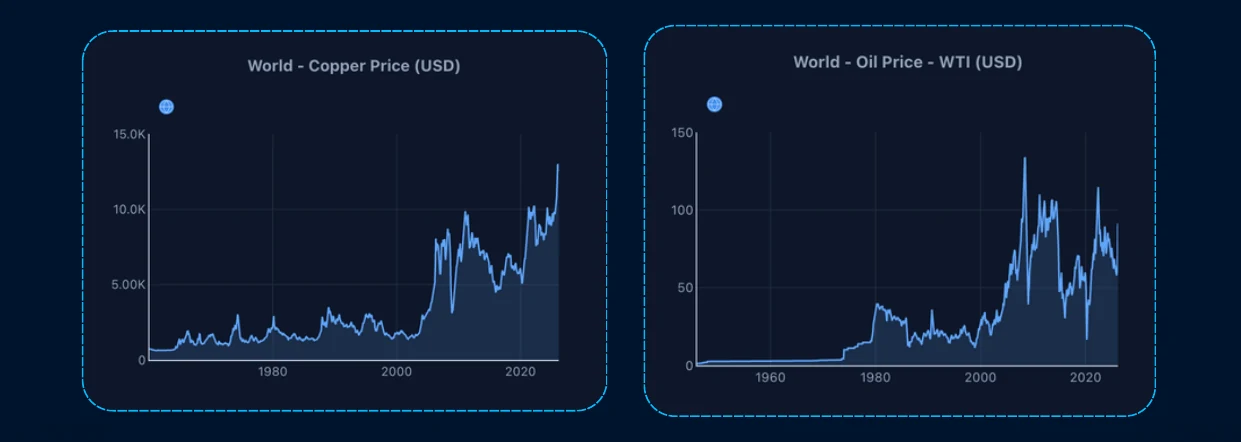
The consequence for investment and monetary analysis is significant. If decarbonization is slower and more expensive than official targets imply, then the energy transition will be persistently inflationary rather than deflationary. Green infrastructure requires enormous quantities of steel (for wind turbines, transmission towers, pipelines), cement (for foundations, offshore platforms, battery storage facilities), and copper, lithium, cobalt, and rare earth elements whose extraction is itself massively energy-intensive. The International Energy Agency has estimated that a net-zero transition would require as much as six times current mining output for critical minerals by 2040. Every ton of those minerals requires energy to extract, refine, and transport — and the marginal cost of that energy is rising, not falling, as the easiest deposits are depleted.
III. The German Lesson: When Models Meet Reality
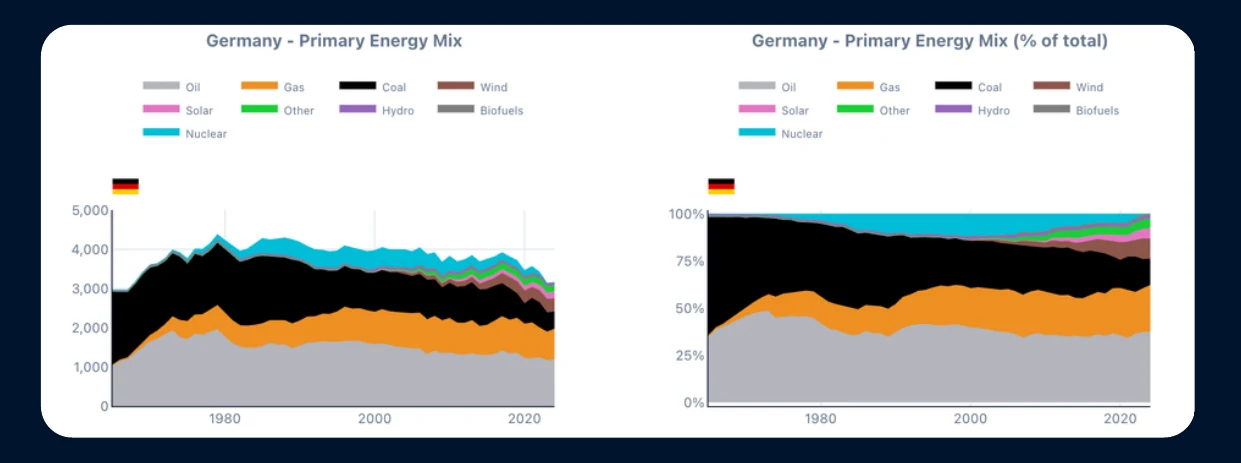
Smil's most instructive single case study — the one that should be required reading in every central bank economics department — is the German Energiewende. Germany began its energy transition in earnest in the early 2000s, committing hundreds of billions of euros to the buildout of wind and solar capacity. By Smil's accounting, that buildout had cost approximately 400 billion euros by the time he wrote — one of the largest peacetime infrastructure investments in European history.
The result: Germany's share of fossil fuels in total primary energy supply fell from approximately 84% to 78% over twenty years of effort. Six percentage points. In two decades. At a cost approaching half a trillion euros.
Meanwhile, Germany remained dependent on Russian gas for its industrial processes, its heating systems, and its backup power generation. When Russia invaded Ukraine and the gas stopped flowing, Germany — the world's leading proponent of the green transition — had to restart coal-fired power plants, extend the life of nuclear facilities it had publicly committed to closing, and accept energy prices that triggered a wave of industrial deindustrialization that is still reverberating through the European economy today.
The macro lesson is one that any serious analyst of economic history would recognize: policy commitments made without adequate grounding in physical constraints do not bend physical reality. They collide with it. And the collision, when it comes, is inflationary, destabilizing, and disproportionately damaging to the industrial base — which is to say, to the tradeable goods sector, to exports, to employment in manufacturing, and ultimately to the real living standards of workers who are not protected by the financial asset buffers available to the professional and ownership classes.
IV. Deglobalization, Supply Chain Fragility, and the Return of Geography
Smil's chapter on globalization offers a complementary angle that is equally relevant to the macro investor. His observation is deceptively simple: globalization is not a natural state. It is an engineering achievement — one that depends on cheap energy (containerized shipping runs on bunker fuel), stable geopolitics, and the deliberate construction of integrated supply chains that concentrate production in the lowest-cost location for each component.
He illustrates the fragility of this system with an example that has since become famous: in 2020, 70% of the world's medical rubber gloves were manufactured in a single factory complex in Malaysia. The pandemic's disruption of that one facility cascaded through global healthcare supply chains with consequences that were both predictable and apparently unforeseen by every government that had signed off on the procurement arrangements that created the concentration.
This is, in Smil's framework, a systematic error — not of any individual decision-maker, but of an entire economic philosophy that treated supply chain efficiency as an unqualified good and supply chain resilience as an unnecessary cost. It is the physical economy's version of the financial system's pre-2008 mistake: the optimization of individual components of a system without regard for the system-level fragility that optimization creates.
The macro consequences of the reversal of this philosophy are now playing out in real time. Onshoring, friend-shoring, and strategic autonomy initiatives — across semiconductors, pharmaceuticals, critical minerals, food security, and defense — all involve producing the same goods in less efficient, higher-cost locations. This is structurally inflationary. It is not a temporary disruption. It is a permanent repricing of the risk premium that was previously embedded in global supply chains and held at zero. The financial markets that priced in indefinite globalization as a deflationary constant are in the process of discovering that the physical and geopolitical foundations of that deflationary constant have changed.
V. What This Means for Markets: The Commodity Realist's Investment Framework
Smil is not an investment strategist, and How the World Really Works is not a market letter. But the implications of his framework for asset allocation and macro positioning are sufficiently clear that they deserve to be stated explicitly.
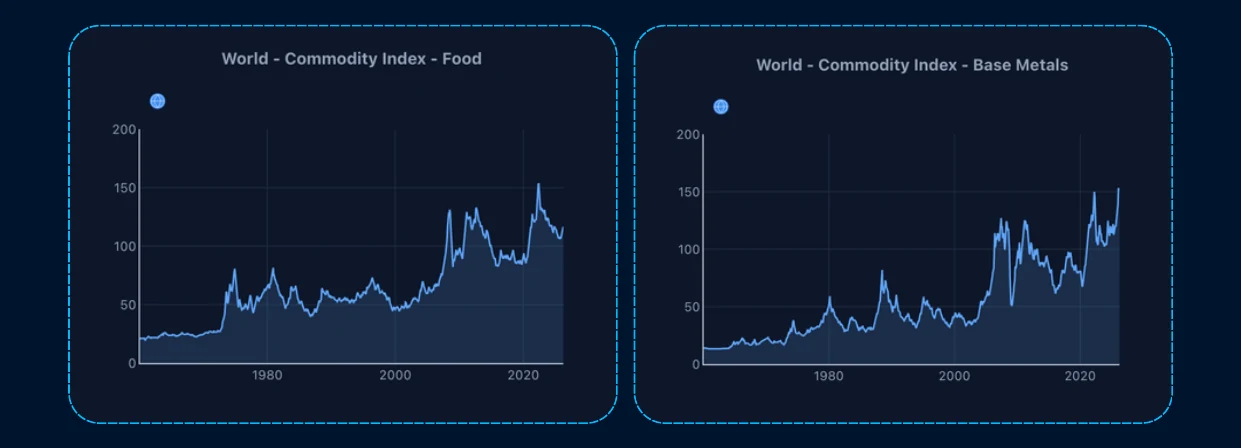
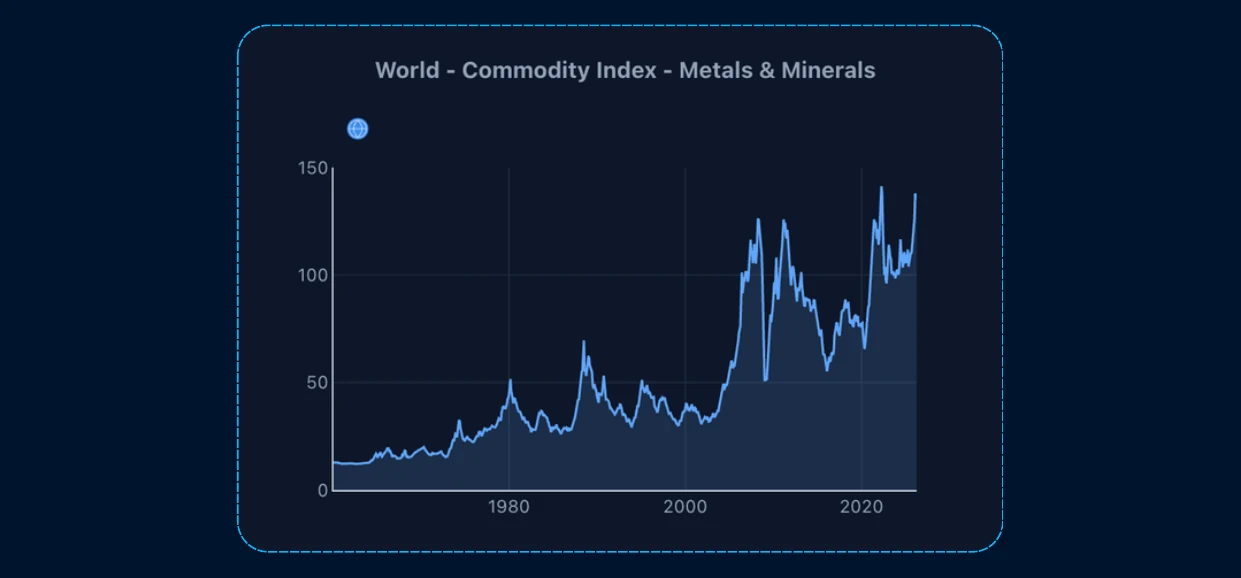
First, commodity scarcity is not cyclical — it is structural. The energy transition requires more physical materials per unit of economic output than the fossil fuel economy it is replacing. Wind turbines and solar panels require more steel, copper, and concrete per megawatt-hour of lifetime output than a natural gas combined-cycle plant. Battery storage requires lithium, cobalt, nickel, and manganese in quantities that dwarf current mining capacity. The transition, if it proceeds, is bullish for hard commodities — not in the short-term speculative sense, but in the multi-decade structural sense. Investors who understand Smil's materials accounting will not be surprised when energy transition narratives produce commodity supercycles rather than resource obsolescence.
Second, the "immaterial economy" narrative — the idea that advanced economies are progressively dematerializing, substituting software and services for physical inputs — is overstated to the point of being misleading. Every data center requires steel, concrete, copper wiring, and enormous quantities of electricity. Every electric vehicle requires roughly six times the critical mineral content of a conventional car. The digital layer sits on top of a physical layer that is growing in absolute terms even as its share of measured GDP appears to shrink. Investors who price physical infrastructure as a legacy sector and digital infrastructure as the future are making a category error that Smil's framework makes visible.
Third, food security is an underpriced macro risk. Smil's account of the Haber-Bosch process — which synthesizes ammonia from atmospheric nitrogen using natural gas as a hydrogen source and energy input — is sobering in its implications. Roughly half of humanity alive today would not exist without synthetic nitrogen fertilizer. Natural gas prices are therefore, in a very direct sense, food prices. Any sustained disruption to natural gas supply — whether from geopolitical conflict, infrastructure failure, or a too-rapid transition away from gas production — would propagate within months into global food price inflation of a magnitude that no central bank rate decision can address. Agricultural commodity exposure, and attention to energy-food price correlations, is not a niche specialist interest. It is a core macro risk.
Fourth, and most consequentially for the medium-term inflation outlook: the structural upward pressure on energy, materials, and food prices — all rooted in the physical realities Smil documents. The decade of near-zero interest rates was, in part, a product of the deflationary tailwinds of Chinese manufacturing integration, cheap energy, and frictionless global logistics.
VI. The Honest Answer to the Hardest Question
Smil closes his book by asking what is, in his framing, the most profound question of the age: are we irrevocably doomed, or is a brighter utopia ahead? His answer is neither. He is, as he repeatedly insists, neither an optimist nor a pessimist. He is a scientist. And the scientific answer is: a mixture. Progress on some dimensions, setbacks on others. Near-miraculous advances in some areas — crop yields, medical technology, materials science — coexisting with seemingly intractable difficulties in others — decarbonizing heavy industry, managing freshwater scarcity, reversing soil degradation.
This is an intellectually unsatisfying answer for anyone seeking the emotional resolution of a strong narrative. It is, however, the correct answer. And its correctness has a specific implication for how we think about macroeconomic forecasting and monetary policy.
The financial system is structurally biased toward strong narratives. Investors need conviction. Policymakers need mandates. Central banks need frameworks. The result is a systematic preference for clear, decisive stories — the soft landing, the green transition, the demographic dividend, the AI productivity boom — over the messy, contested, probabilistic reality that Smil describes. Every time a strong macro narrative collapses on contact with physical reality, there is a market dislocation: a bond rout, a commodity spike, a currency crisis, an inflation surprise.
Get the next article by email
One email when a new piece is published. Nothing else, and one-click unsubscribe from any message.